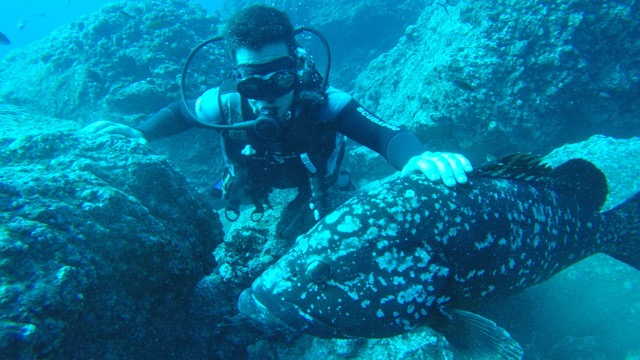
Madeira is one of the best places in Europe to see whales and dolphins in the wild. Twenty-nine species of cetaceans — from playful bottlenose dolphins to sperm whales — live in or migrate through the island’s deep coastal waters, and boat tours run all year round from Funchal and Calheta, starting at about €35 for a 2.5–3 hour trip. In this updated guide: which species you can spot in each season, verified 2026 prices, whether to leave from Funchal or Calheta, and how to pick the right boat.
Why Madeira is one of Europe’s best whale-watching spots
Madeira has no continental shelf. The volcanic island rises straight out of the Atlantic, so the ocean floor drops to more than 1,000 metres just a few kilometres from the coast — exactly the deep water that whales and oceanic dolphins prefer. That means no long transit to “whale territory”: boats reach the sighting areas within minutes of leaving the marina.
Add a sheltered, sunny south coast with calm seas most of the year, and you get one of the highest densities of cetaceans in the Atlantic: 29 species recorded — roughly a third of all whale and dolphin species on Earth — between residents and seasonal visitors. Researchers estimate that around 125 bottlenose dolphins live permanently in Madeiran waters.
What you can see — and when
| Species | When to see them | Notes |
|---|---|---|
| Bottlenose dolphin | All year | Resident — the most common sighting |
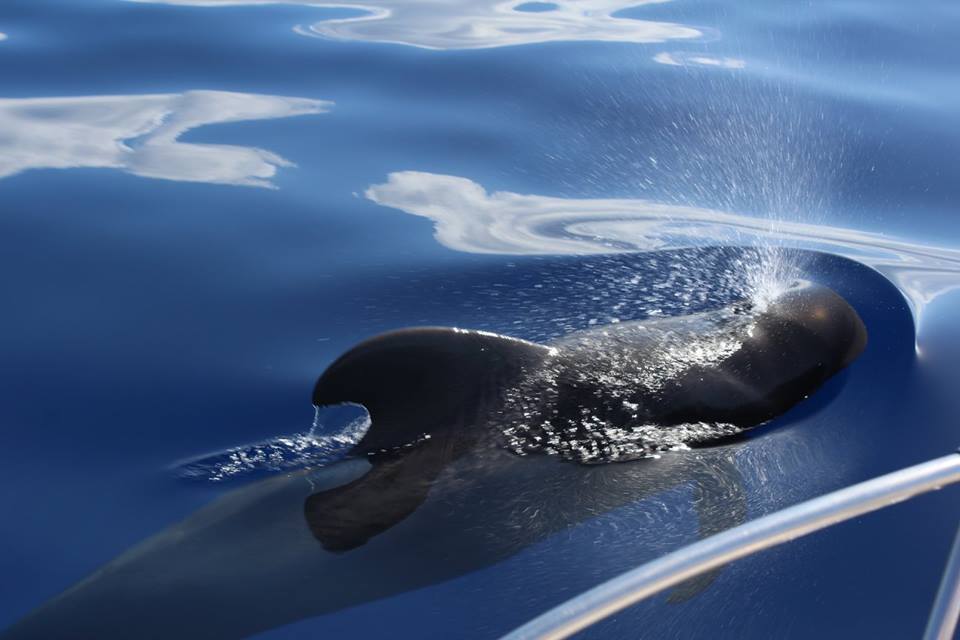
| Short-finned pilot whale | All year | Resident family groups |
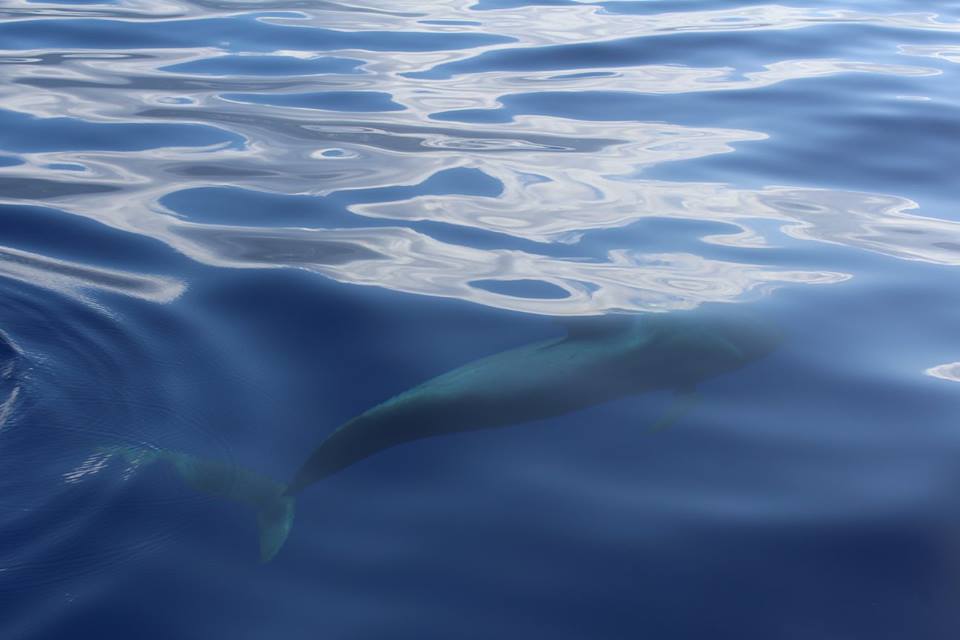
| Sperm whale | All year | Regular visitor — the island’s giant |
| Bryde’s whale | April – October | The “summer whale” of Madeira |
| Atlantic spotted dolphin | May – October | Big acrobatic pods in summer |
| Common dolphin | November – April | The winter regular |
| Striped & Risso’s dolphin, beaked whales | Occasional | Lucky-day sightings |
| Loggerhead sea turtle | All year | Frequent bonus guest |
There is no bad season: something can be seen every month of the year. Summer simply adds more species to the list — which is why most operators report success rates above 90%.
Whale watching prices in Madeira (2026)
| Tour type | Duration | Adult | Child |
|---|---|---|---|
| Catamaran from Funchal | ~3 h | from €35 | from €20 (5–11) |
| Traditional wooden boat (Calheta) | 2.5 h | ~€52 | ~€31 (2–15) |
| RIB / speedboat (small group) | ~2 h | €60–67 | ~€35 |
| Snorkelling-with-dolphins upgrade | — | +€20 | +€20 |
| Private charter | ~3 h | from ~€350 per group | |
Booking directly with the operators is usually the same price or slightly cheaper than the big platforms, and most offer free cancellation up to 24–48 hours before departure. In July and August, book at least a few days ahead — the small-group boats sell out first.
Funchal or Calheta?
Funchal is the convenient choice: tours leave from the marina in the city centre, the boats are bigger (catamarans take up to ~200 people), and it is the cheapest way to get on the water. If you are staying in Funchal without a rental car, this is your option.
Calheta, on the sunnier west coast, is where the small-group operators are based. Boats take 8–16 passengers, the atmosphere is quieter, and the sighting areas of the wild west coast are right at the doorstep. If you want a more personal trip — and the chance to talk to marine biologists on board — drive to Calheta.
Which boat should you choose?
- Catamaran — the most stable and the cheapest. Best for families, seniors and anyone worried about seasickness. The trade-off: you share the deck with a crowd.
- RIB / speedboat — fast and close to the action, reaching sighting areas first. Bumpy ride; usually not recommended for children under 5 or pregnant women.
- Traditional wooden boat — a restored Madeiran fishing boat with ~16 passengers: the charming middle ground between comfort and intimacy.
- Insider detail: most operators keep vigias — spotters with binoculars on the cliffs — who radio the boats to where the animals are. That is a big part of those 90%+ success rates.
The water really is that blue
Still deciding? This is what the south-coast water you will be sailing on looks like — filmed around Madeira’s beaches and natural pools by travel creator Viajando con Vero:
Whale watching, the responsible way
Madeira takes its cetaceans seriously. Licensed operators follow the region’s whale-watching rules: limited approach distances, limited time with each group of animals, and a strict no-feeding policy — everything you see is natural behaviour in open ocean. The archipelago’s whaling past ended in 1981, and the old whaling station at Caniçal is now the Madeira Whale Museum, a great rainy-day complement to the boat trip.
Seeing a sperm whale surface next to your boat is a genuinely moving experience — and it is the exact opposite of watching trained animals in a tank. If you love these creatures, this is the way to meet them: wild, free, and on their terms.
Frequently asked questions
Can you see whales in Madeira all year round?
Yes. Bottlenose dolphins, pilot whales and sperm whales are seen in every season. Summer (April–October) adds Bryde’s whales and Atlantic spotted dolphins to the list.
How much does whale watching cost in Madeira?
From about €35 per adult on a catamaran from Funchal to €60–67 on a small-group speedboat. Children pay roughly half. Trips last 2 to 3 hours.
Are sightings guaranteed?
No — these are wild animals. But operators report success rates above 90%, helped by cliff-top spotters, and several offer a free second trip if nothing is seen.
Should I leave from Funchal or Calheta?
Funchal for convenience and the cheapest catamaran tours; Calheta for small groups, marine-biologist guides and the quieter west coast.
Prices and facts verified in July 2026 (operator websites and official sources). Planning more ocean days? See our guides to the Desertas Islands — home of the rare monk seal — and Madeira’s beaches and natural pools, or watch the coast from above at Cabo Girão skywalk.