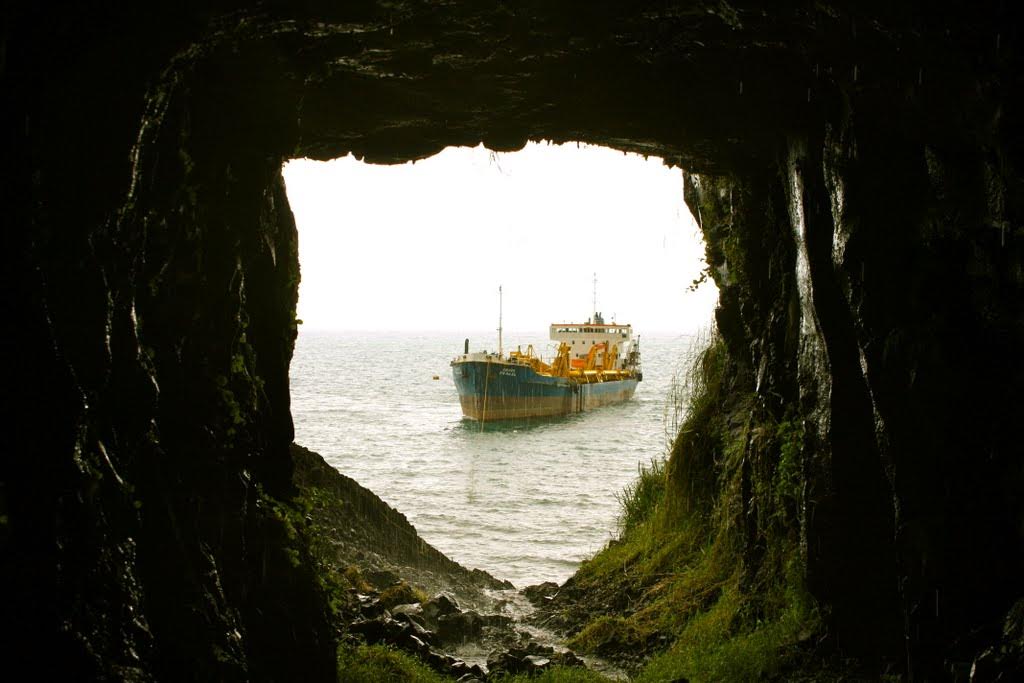
Madeira Island has more than 150 road tunnels — one of the highest concentrations of tunnels per square kilometre anywhere in the world. The longest, between Faial and Santana, stretches 3,168 metres — the longest tunnel in Madeira, and Portugal’s longest until the mainland Marão Tunnel opened in 2016. Locals joke that the island is a “Swiss cheese” of volcanic rock, and once you drive here you’ll understand why: on some routes you alternate between day and night every couple of minutes. In this updated guide: how many tunnels there are, the records they hold, their fascinating history — and what it means for your driving holiday.
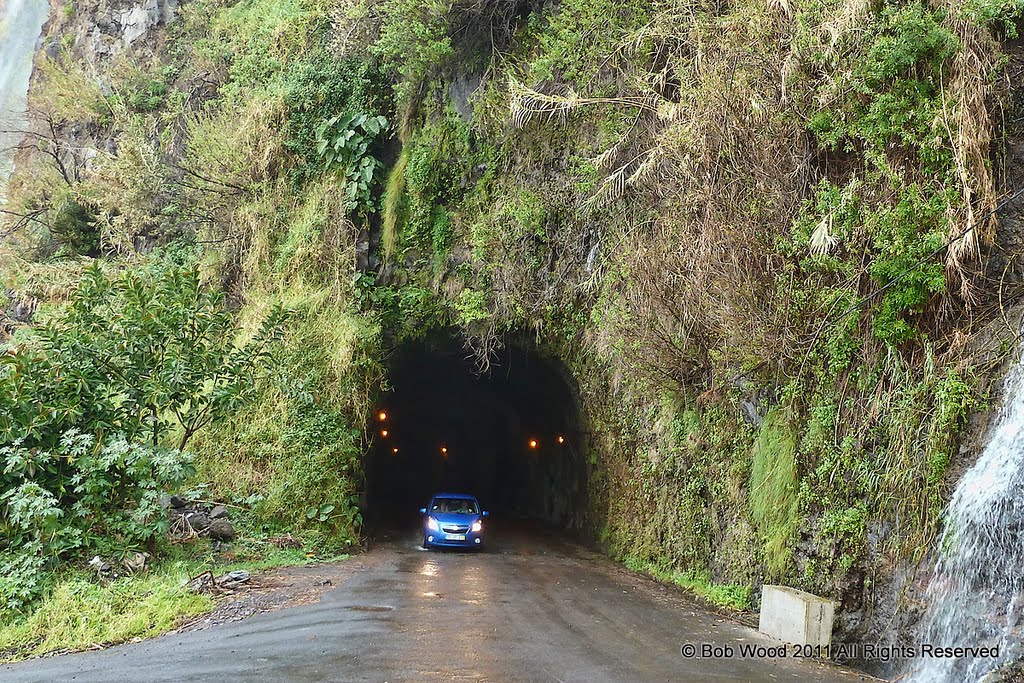
How many tunnels are there in Madeira?
There are more than 150 road tunnels cutting through the mountains of Madeira Island. The VR1 motorway alone — the island’s main “Via Rápida”, running 44 km from Ribeira Brava to Caniçal — passes through 30 tunnels. Add the expressways (Vias Expresso) that link the north coast, and driving across Madeira becomes a constant rhythm of mountain, tunnel, ocean, tunnel.
It’s a staggering feat of engineering for an island of just 741 km². Before the tunnels, a bus from Funchal to Porto Moniz on the north coast took up to 8 hours. Today the same trip takes about 45 minutes.
The record-breaking tunnels
| Tunnel | Length | Record |
|---|---|---|
| Faial – Santana | 3,168 m | Longest tunnel in Madeira (Portugal’s longest until 2016) |
| Encumeada (Serra de Água – Rosário) | ~3,100 m | Cost around €80 million |
| Machico – Caniçal | 2,100 m | Longest double (twin-tube) tunnel in Portugal |
Curious specifically about the biggest one? See our dedicated guide: The Longest Tunnel in Madeira.
And it’s not just tunnels: Madeira also has more than 135 bridges and viaducts. The Socorridos bridge has a main span of 106 metres, and the João Gomes bridge towers 125 metres above the valley below — one of the tallest in Europe when it opened.

From “furados” dug by hand to modern highways
The story of Madeira’s tunnels begins long before the motorway era. The first passages, called “furados”, were excavated by hand through the volcanic rock — narrow, dark holes that allowed farmers and fishermen to move between valleys that were otherwise cut off from each other.
The transformation came in the 1990s and 2000s, when EU-funded highway projects replaced the terrifying old regional roads with the modern network you drive today. The old ER101 coastal road between São Vicente and Porto Moniz — a narrow lane cut into the cliff face, showered by waterfalls — was replaced by the VE2 expressway and its tunnels in the 2000s.
💡 Travel tip: sections of the old coastal road still exist and have become an attraction in their own right. The stretch near Seixal, where a waterfall pours directly onto the old road, is one of the most photographed spots on the island.
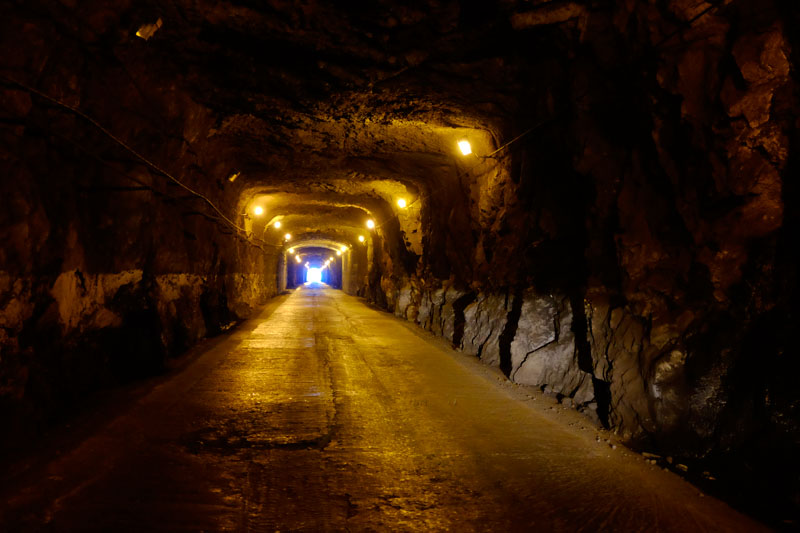
Driving through Madeira’s tunnels: what to expect
- They are free. There are no tolls on Madeira’s motorways and expressways — unlike mainland Portugal.
- Take off your sunglasses before entering. You’ll go from bright Atlantic sunshine to tunnel lighting dozens of times a day.
- Headlights on is mandatory inside tunnels (rental cars usually have automatic lights, but check).
- The longest tunnels have emergency bays and SOS phones — the VR1’s safety systems were fully renovated in recent years.
- GPS loses signal in the longer tunnels. If your exit comes right after a tunnel, get in lane early.
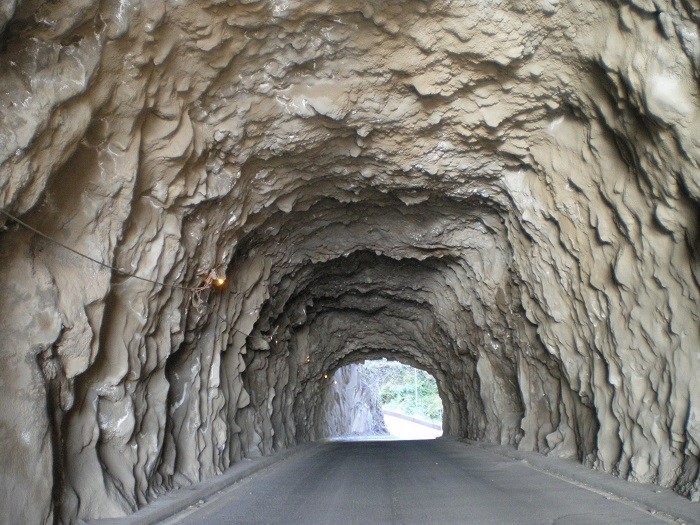
See the tunnels in action
Want to feel what it is like? This relaxing 4K drive goes through tunnel after tunnel on Madeira’s highways:
Frequently asked questions
How many tunnels does Madeira have?
More than 150 road tunnels cross the island, plus over 135 bridges and viaducts. The VR1 motorway alone has 30 tunnels in 44 km.
What is the longest tunnel in Madeira?
The tunnel between Faial and Santana, at 3,168 metres — it is also the longest road tunnel in all of Portugal.
Do you pay tolls in Madeira’s tunnels?
No. All motorways, expressways and tunnels on Madeira are toll-free.
Why does Madeira have so many tunnels?
The island is essentially one big volcanic mountain rising from the Atlantic. Deep valleys and 1,800-metre peaks made land travel extremely slow until the tunnels were built — the Funchal–Porto Moniz trip dropped from 8 hours to about 45 minutes.
A Portuguese poet once said that travelling across this island means alternating between day and night on a single journey from the north coast to the south. Anyone who has driven Madeira’s roads knows exactly what he meant — and it’s one more reason why simply driving here is part of the adventure.
Facts and figures verified in July 2026 (Via Expresso / Vialitoral / official sources). Planning your trip? See also our guides to the Monte toboggan ride and the São Vicente caves.