


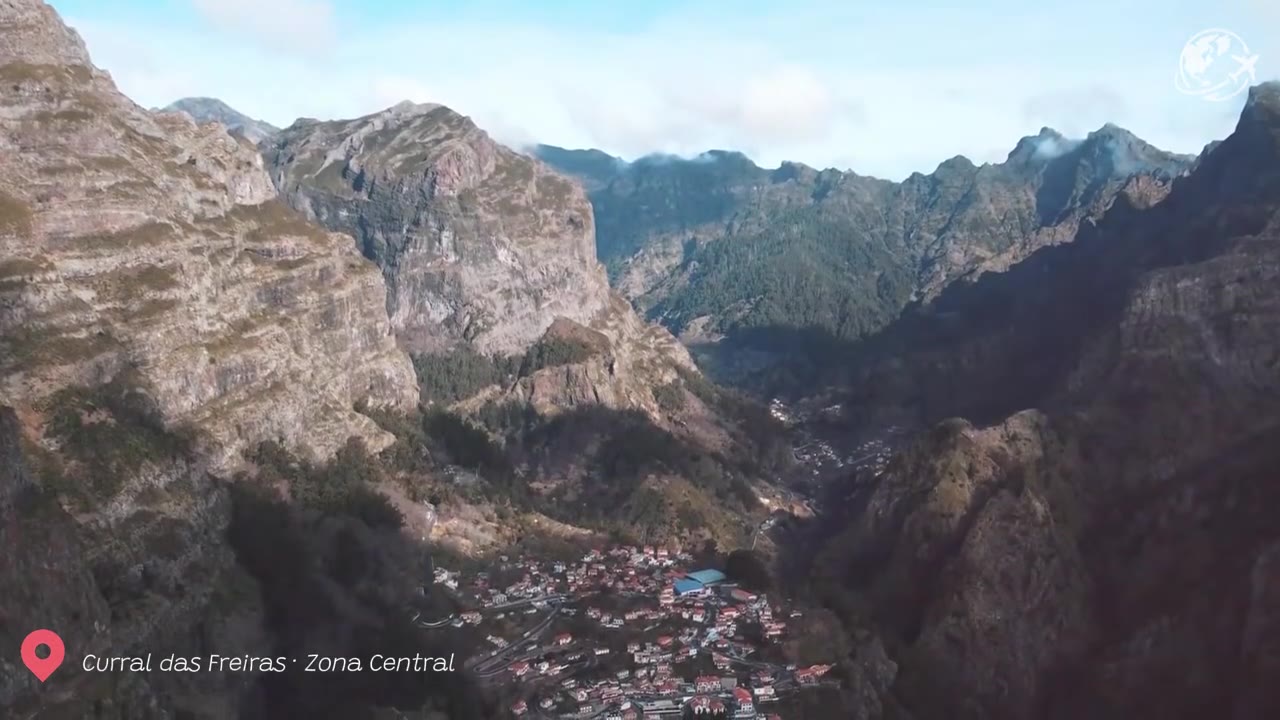
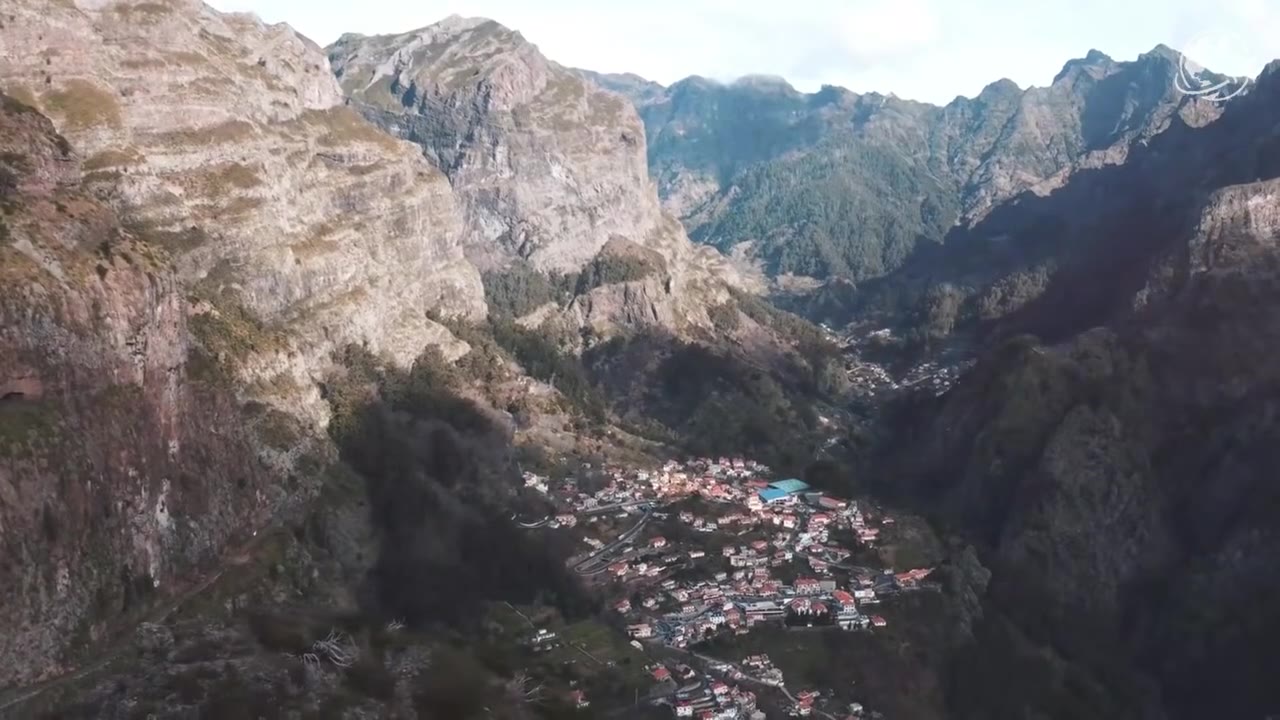
Curral das Freiras is a village sitting at the bottom of a colossal green amphitheatre in the exact centre of Madeira, reachable only through a mountain tunnel or a steep footpath — and it is one of the island’s most photographed places for good reason. In this updated guide: the story of the nuns who hid here from pirates in 1566, how to reach the famous Eira do Serrado viewpoint, what the village itself offers (chestnut cake included), how to get there by car or by bus 81, and the practical details you need for 2026.
A valley named after nuns who fled pirates
The name translates roughly as “corral of the nuns,” and the story behind it is not folklore invented for tourists. The nuns of Santa Clara convent in Funchal escaped pirates that attacked the city in 1566 and took refuge in this remote, near-inaccessible valley, believing — correctly — that no one would follow them down. For centuries the only way in or out was a steep mountain path; the village remained remote until a road was built in 1959, and today you can drive to the Nuns’ Valley in less than an hour from Funchal. Locally, the enormous bowl-shaped depression was long mistaken for the crater of an extinct volcano, though geologists now attribute it to erosion and, further downstream, a gigantic landslide of around 100 million cubic metres of material that created the flat area on which the village was later built.
Eira do Serrado: the classic postcard viewpoint
Almost every visit to Curral das Freiras begins at Eira do Serrado, a viewpoint perched at an altitude of 1095 metres offering an unobstructed view of the picturesque town of Curral das Freiras. The lookout sits in the mountainous interior of the municipality of Câmara de Lobos, in the heart of the island, and is accessed via a footpath that begins next to the Estalagem da Eira do Serrado. It is a short, easy walk from the car park — around ten minutes, with some steps — but the payoff is dramatic: the village appears, tiny, at the bottom of near-vertical mountain walls. There is no entrance fee, and near the car park you will find a small café, a souvenir shop, and toilets. Arrive early if you can — mid-morning tends to be busier, especially when tour groups arrive, and arriving earlier or later in the afternoon usually means a quieter experience.
Down into the village: what to expect
From Eira do Serrado, a cobbled path — historically one of the parish’s main access routes before the road existed — winds down into the valley. The path is a well-conserved walkway roughly 2.7 km long in one direction, and most walkers treat it as a one-way descent, catching the bus back up afterwards rather than climbing it in the heat. Reviewers describe the walk down as taking approximately 1-2 hours, past a small midway lookout with views over the surrounding peaks. Once at the bottom, Curral das Freiras itself is compact and unhurried: a whitewashed parish church, terraces of vines and chestnut trees clinging to impossibly steep slopes, small cafés serving homemade liqueurs, and walking paths that fan out along the valley floor. It rarely feels crowded even when the viewpoint above is busy, which is part of its charm.
Chestnut everything: cake, liqueur and the Festa da Castanha
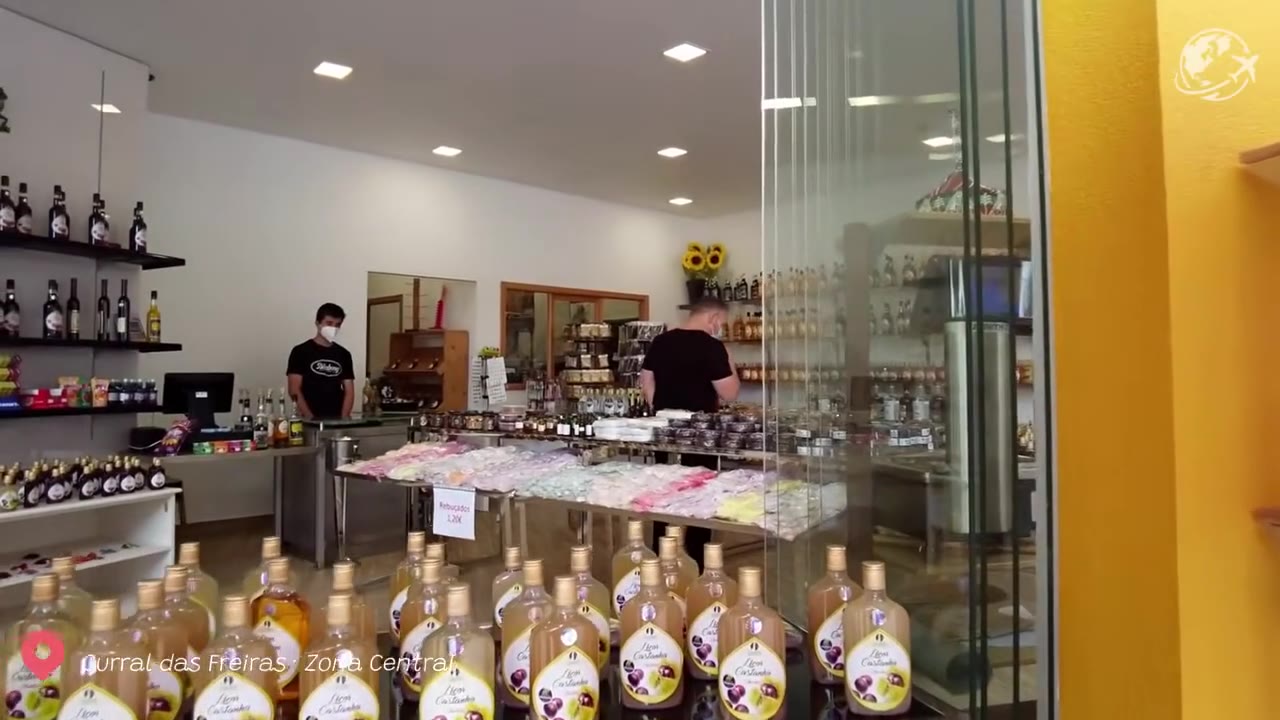
Chestnuts have shaped the local economy and diet for generations, and the village makes the most of it: chestnut soup, chestnut cake, roasted chestnuts sold from paper cones in autumn, and above all licor de castanha, a sweet chestnut liqueur sold in nearly every café and souvenir shop. The tradition peaks each year with the Festa da Castanha, celebrated between the 31st of October and the 1st of November, when Curral das Freiras honours one of the most popular autumn fruits: the chestnut. First held on 1 November 1983, it was the first festival in the country dedicated to the chestnut, and it now draws large crowds for an allegorical procession involving more than 350 costumes and several decorated floats, alongside dozens of stalls where local producers sell chestnuts and dishes made from them. If you are visiting for the festival, expect the single access road to be busy and consider taking the bus instead of driving.
How to get there: car, tour or bus 81
By car, the drive from Funchal takes you up through Pico dos Barcelos and along the ER107, passing through eucalyptus forest before reaching either the Eira do Serrado turn-off or the tunnel that drops directly into the village; the driving route to Curral das Freiras covers about 18 km one way and the whole trip is easily done as a half-hour drive from Funchal. Parking is free and plentiful at both the viewpoint and in the village itself. If you would rather not drive on Madeira’s narrow mountain roads, public bus 81, run by Horários do Funchal, connects central Funchal to both Eira do Serrado and the village centre, with the full route taking around 54 minutes end to end; many organised half-day tours from Funchal also include Curral das Freiras alongside Cabo Girão or Câmara de Lobos.
| Location | Câmara de Lobos municipality, central Madeira |
| Distance from Funchal | Around 18 km, roughly 25–35 minutes by car |
| Eira do Serrado altitude | 1,095 metres |
| Viewpoint entrance fee | Free |
| Path Eira do Serrado to village | About 2.7 km one way, 1–2 hours on foot, moderate difficulty |
| Parking | Free at both the village and the Eira do Serrado car park |
| Public transport | Bus 81 (Horários do Funchal) from central Funchal |
| Best time to visit | Early morning for quiet views; late October/early November for Festa da Castanha |
Insider tips for visiting Curral das Freiras
- Go early or late in the day — tour coaches cluster at Eira do Serrado mid-morning, so arriving at opening time or after lunch means a far calmer viewpoint.
- Bring a light jacket even in summer; the altitude and wind exposure at the viewpoint make it noticeably cooler than Funchal.
- Try the licor de castanha in one of the village cafés — it is the single most typical souvenir to bring home from here.
- Walk down, ride up — most visitors find it far more enjoyable to descend the cobbled path from Eira do Serrado into the village and then catch bus 81 back rather than climbing the steep path in reverse.
- Mind the road if you are driving — the final stretches up to the viewpoint are narrow and winding, so take corners slowly and be ready to give way to oncoming coaches.
- Combine it with Pico dos Barcelos on the way up or down, a quick roadside viewpoint over Funchal that costs nothing extra in time.
Watch: Curral das Freiras and Eira do Serrado on video
For a visual feel of the valley and the viewpoint before you go, this chapter from Rutas del Mundo’s Madeira guide captures both the descent into the village and the view from above.
Frequently asked questions
Why is Curral das Freiras called the Nun’s Valley?
Because nuns from the Santa Clara convent in Funchal took refuge here after a pirate attack on the city in 1566, hiding in a valley so remote it had almost no other access for centuries.
Is the walk from Eira do Serrado to the village difficult?
It is a well-maintained cobbled path of roughly 2.7 km one way, rated moderate; most visitors take one to two hours to descend and prefer to return by bus rather than climb back up.
Do I need a car to visit?
No — bus 81 from Funchal serves both the Eira do Serrado viewpoint and the village centre, making it entirely possible to visit without renting a car, though a car gives more flexibility with timing.
When is the best time to visit for the chestnut festival?
The Festa da Castanha traditionally runs from 31 October to 1 November, coinciding with All Saints’ Day, and is the busiest and most festive time to be in the village.
Facts and prices verified in July 2026. For more mountain viewpoints on the island, see our guide to Pico do Arieiro, and if you want to keep exploring Madeira’s dramatic interior, check our full Pico Ruivo hiking guide or browse more Attractions across the island.

