


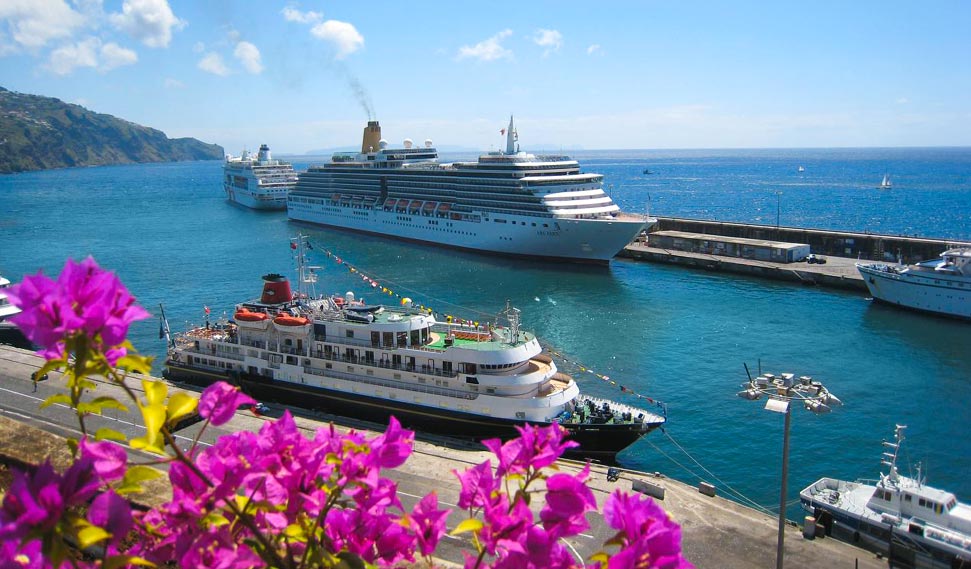
Madeira can be an excellent destination for wheelchair users and travellers with reduced mobility, but it needs realistic planning: Funchal’s seafront and selected attractions work well, while the island’s steep terrain makes spontaneous exploring much harder. In this updated guide: where to stay for the smoothest daily access, which gardens, viewpoints and bathing complexes are practical, and how to arrange airport assistance, adapted transfers and public transport. It is an honest accessible Madeira wheelchair friendly travel guide for enjoying the island without underestimating its hills.
Start with the right base: Funchal’s flatter coastal districts
For most visitors, Funchal is by far the most practical base. The best everyday terrain is along the lower city and western seafront: the harbour area, Avenida do Mar, Avenida do Infante, the Lido and São Martinho. These neighbourhoods have hotels, restaurants, supermarkets, pharmacies and long stretches of promenade within relatively manageable distances.
The historic centre is rewarding for a meal, market visit or museum stop, but it is not uniformly smooth. Pavements can be narrow or paved with traditional stone, kerbs vary and streets rise sharply only a block or two inland. Treat Old Town Funchal as a short, targeted outing rather than a place to roll around for hours.
When choosing accommodation, do not rely on the phrase “accessible hotel” alone. Ask the property for photographs and measurements of the bedroom doorway, bathroom door, shower entrance, shower seat, grab rails, bed height and the route from drop-off point to reception. Also ask whether the accessible room has a sea view, whether every lift reaches the pool and breakfast areas, and whether the hotel stands on a steep approach road. A hotel near the Lido promenade can make a major difference to the independence of your stay.
Easy-access Funchal: promenades, parks and culture
The coastal promenade around Lido is Madeira’s most dependable outdoor option for a relaxed day. It is largely level, busy with cafés and hotels, and easy to combine with the bathing complexes. Praia Formosa is farther west and has a long waterfront setting, although surfaces and connections vary, so it is best reached by taxi or adapted transfer rather than assuming every section will be easy to navigate. See our practical Praia Formosa guide before planning a beach day.
Santa Catarina Park is another sensible central choice. It overlooks Funchal harbour and has broad open areas, benches and a pleasant bay view. Its paths include slopes, however, so enter with enough time and use the gentler routes rather than expecting a completely flat circuit. The park is generally open daily; the published seasonal hours are 07:00–22:00 from 22 March to 22 September and 07:00–20:00 from 23 September to 21 March.
For an indoor attraction, the Monte Palace Museum has access ramps and adapted toilets. The museum is part of the wider Monte Palace estate, but the tropical garden itself is large, hilly and includes uneven paths and steps. It can still be worthwhile for some wheelchair users, especially with a companion and pre-arranged transport, but it should not be treated as an entirely step-free garden visit.
Viewpoints and nature without pretending Madeira is flat
Madeira’s scenery is its great strength, and a private adapted vehicle is often the best way to experience it. Instead of choosing tours by the number of stops, request a slower itinerary with confirmed accessible toilets, short distances from parking and time for the driver to position the vehicle close to the viewpoint.
Pico dos Barcelos is one of the strongest panoramic choices near Funchal. At 355 metres above sea level, it looks across the city, harbour and, on clear days, the Desertas Islands. Its recent renovation improved access, and the parking area is close to the main terrace, making it much more realistic than viewpoints reached by long trails.
For a nature-focused outing, Madeira Tourism identifies a roughly 2 km route between Pico das Pedras and Queimadas in Santana that can be used by visitors with electric wheelchairs in dry conditions. This is an exception rather than the rule: most levada walks and mountain routes have narrow paths, steps, exposed edges, tunnels or uneven ground and are unsuitable for standard wheelchairs. Do not plan summit walks such as Pico Ruivo as an accessible activity, even where the approach is shorter; our Pico Ruivo from Achada do Teixeira guide explains why the route remains a mountain hike.
| Practical fact | What to know |
|---|---|
| Best base | Funchal’s lower centre, Lido or São Martinho, close to the seafront promenade |
| Airport assistance | Madeira Airport provides free assistance for passengers with reduced mobility when requested through the airline or travel agent |
| Wheelchair bus service | SIGA requires pre-booking by 13:00 on the day before the intended journey for its dedicated wheelchair passenger service |
| Important bus limitation | Wheelchair transport on regular public buses is not possible in Funchal’s high zones because of the terrain and available vehicles |
| Accessible bathing option | Ponta Gorda Bathing Complex, Funchal; published 2026 standard entry: €6 |
| Nature option | Pico das Pedras–Queimadas route, Santana; approximately 2 km and suitable for electric wheelchairs only in dry weather |
| Easy viewpoint | Pico dos Barcelos, around a 10-minute drive from central Funchal |
Swimming and bathing complexes: choose facilities over wild beaches
Madeira is not a classic sandy-beach destination, and many natural swimming spots involve steps, rocks, steep lanes or rough sea conditions. For a more dependable accessible day by the Atlantic, use Funchal’s managed bathing complexes rather than an unstaffed cove.
Ponta Gorda, on the Lido seafront, has support facilities including changing rooms, a bar, first aid, accessible infrastructure and a supervised bathing area. The published 2026 price for a standard individual entry is €6; visitors with proof of disability are listed at €2. Confirm seasonal opening hours, bathing assistance and the availability of any water-access equipment directly before travelling, as these can depend on staffing and sea conditions.
Do not assume that a beach described as “accessible” means independent entry into the sea. It may refer to the entrance, toilets, ramps or pool deck rather than a beach wheelchair or hoist. Tell staff exactly what assistance and equipment you need before setting out.
Airport, transfers and getting around the island
Request reduced-mobility assistance when booking your flight, then reconfirm it with your airline before departure. Madeira Airport is adapted for passengers with special needs and participates in Portugal’s free airport assistance provision. If you use a powered chair, check your airline’s battery rules well in advance; Madeira Tourism specifically advises notifying the airline about lithium-battery wheelchairs.
For the airport-to-hotel journey, book an adapted transfer in advance and give the operator the folded dimensions, weight, battery type and whether you can transfer into a vehicle seat. The same detail matters for island tours. Madeira Tourism lists accredited accessible-tourism providers offering services such as airport transfers, tailored holidays, mobility-equipment hire and adapted island excursions.
Public buses can be useful for selected Funchal journeys, but should be a backup rather than the foundation of an accessible itinerary. SIGA states that some buses are equipped for passengers with reduced mobility, while its dedicated service requires pre-reservation. Crucially, it also warns that regular wheelchair transport cannot operate in Funchal’s upper areas. For dinner reservations, viewpoints and hotel changes, an accessible taxi or transfer avoids unnecessary uncertainty.
- Book the room, not just the hotel: request written confirmation of the bathroom layout and step-free route from vehicle drop-off to your room.
- Stay close to sea level: the Lido and lower Funchal are much easier for independent outings than hillside hotels.
- Build in rest time: even apparently short routes can involve gradients, cobbles and detours around steep streets.
- Send wheelchair specifications early: include width, length, weight, turning needs and battery information when booking transport.
- Use adapted tours for island days: this is the practical way to see viewpoints, villages and the north coast without tackling inaccessible bus stops.
- Keep a weather-flexible plan: rain can make garden paths and the accessible Santana forest route slippery or unsuitable.
Frequently asked questions
Is Madeira suitable for a full-time wheelchair user?
Yes, especially when based in lower Funchal with an accessible hotel and pre-booked adapted transport. It is less suitable for entirely spontaneous travel because of the island’s steep topography and variable pavements.
Can I use public buses with a wheelchair in Madeira?
Some services can carry wheelchair users, but availability depends on the vehicle, route and capacity. Dedicated SIGA wheelchair transport requires advance booking, and regular wheelchair transport is not available in Funchal’s high zones.
Which part of Funchal is best for accessible accommodation?
The Lido, São Martinho and the lower central area near the harbour are usually the most convenient. Prioritise a hotel with direct or near-direct access to the seafront rather than one high above the city.
Are Madeira’s levada walks wheelchair-friendly?
Most are not. The Pico das Pedras–Queimadas route near Santana is a notable adapted nature option for electric wheelchairs in dry conditions, but every route should be checked in advance.
Facts and prices verified in September 2026. For arrival logistics, read Arriving at Madeira Airport; for a straightforward city panorama, see Pico dos Barcelos Viewpoint; and browse more practical advice in our Plan your Trip category.
