


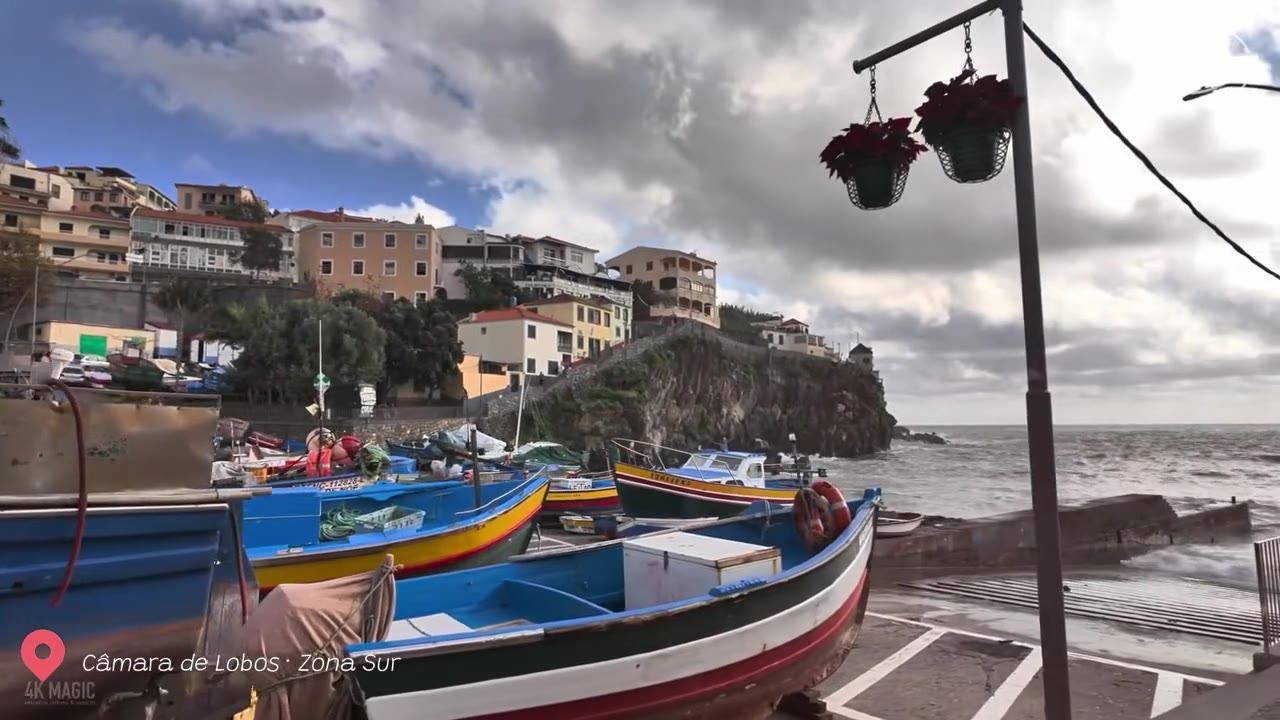
Câmara de Lobos is the small bay of black stones and brightly painted fishing boats that convinced Winston Churchill to set up his easel in 1950 — and it still looks almost exactly as he left it on canvas. In this updated guide: what makes this working fishing village worth the short trip from Funchal, where Churchill actually painted, where poncha was supposedly invented, what to eat, and how to combine it with Cabo Girão next door.
A fishing village that still works for a living
Câmara de Lobos is a fishing village in the truest sense, where fishermen still go out at night to haul in espada, the jet-black scabbard fish, and the harbour is stacked with vivid wooden boats called xavelhas. Unlike some of Madeira’s more polished postcard stops, this one is a real working port: nets drying in the sun, boats being repainted between trips, and old men sitting outside bars in the mid-morning, nursing coffee or something stronger. The name itself, which translates as “chamber of wolves,” is said to come from the monk seals that once inhabited the bay.
Follow Churchill’s footsteps: the painter’s viewpoint
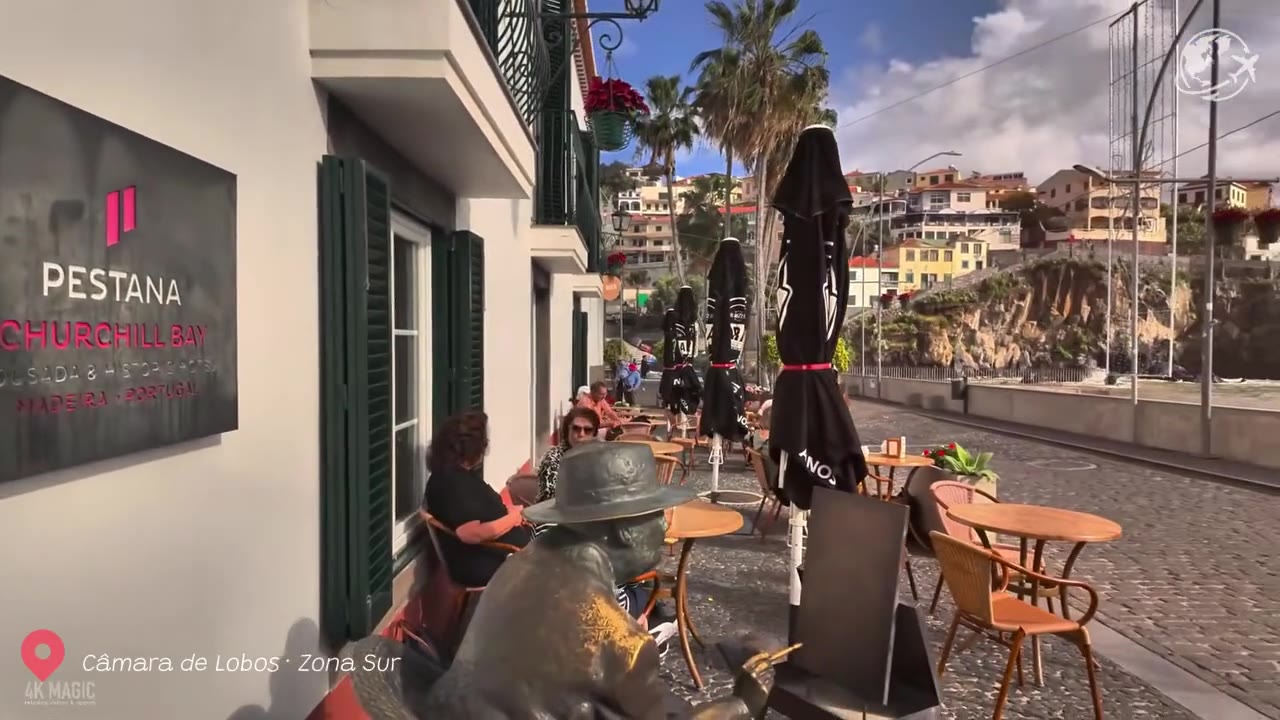
Churchill visited the town in 1950 and fell in love with its charm, spending time painting the picturesque scenes of the town and its surroundings. Today, visitors can reach the Churchill Viewpoint to see the same view that inspired him. A dedicated miradouro now marks the spot, with a plaque, a small statue, and the same view he captured on canvas — genuinely lovely, especially in late afternoon when the light turns golden over the bay. Locals are still visibly proud of the connection: a statue and canvas mark the exact spot where the artist worked.
Poncha: born in these taverns
Câmara de Lobos is considered the birthplace of poncha, a potent mix of aguardente de cana, citrus juice and honey, originally created to warm up fishermen after a day at sea. The waterfront bars around the harbour still serve it the traditional way, muddled with a wooden pestle rather than shaken, and it is worth trying at least one alongside a plate of grilled espada. Look out too for “Nikita,” a local variant served at many waterfront bars.
Scabbard fish and the evening ritual
Câmara de Lobos is a working town specialising in fishing the night-dwelling scabbard fish (espada). The classic local dish is espada com banana, the black scabbard fish served with fried banana, best eaten at one of the harbourfront restaurants. Come in the late afternoon or early evening: this is when fishermen return with the daily catch, and children play while old men chat or play cards on overturned boats — the most authentic slice of village life on offer.
Getting there and getting around
Câmara de Lobos lies just five kilometres from Funchal. Most Rodoeste buses run from Funchal to Câmara de Lobos about four to five times an hour on weekdays, with a ticket to Funchal costing around €2.60. By car it is a straightforward 15-minute drive, and taxis take roughly the same time. Parking in the village is charged wherever blue lines are painted on the road. Once there, the village itself is compact and entirely walkable, from the harbour up to the Ilhéu viewpoint and back down past the church.
Cabo Girão, the giant cliff next door
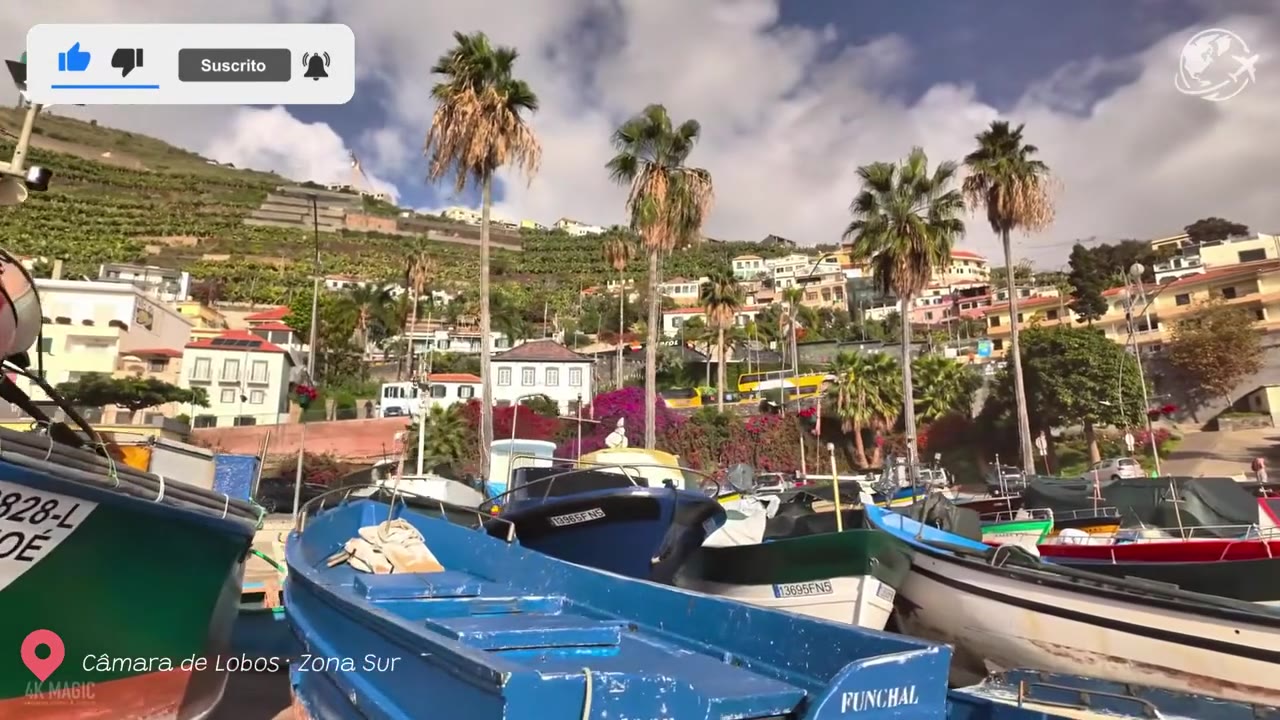
Câmara de Lobos sits directly beneath Europe’s highest sea cliff. Cabo Girão is located roughly 3km from Câmara de Lobos as the crow flies, though the actual driving distance is around 6.5km due to the winding uphill route, taking about 15 minutes by car. A glass-floored walkway is suspended 580 metres above the Atlantic, built around a centuries-old tree that grows through the platform’s central opening. Entry fees and hours are occasionally adjusted, so it is worth checking current prices before you go; for full details see our dedicated Cabo Girão guide. Many visitors pair the two spots into a single half-day trip: village first, cliff second, timed for the late-afternoon light.
| Location | South coast of Madeira, Câmara de Lobos municipality |
| Distance from Funchal | Around 5 km (15–20 minutes by car, bus or taxi) |
| Bus fare (Rodoeste, one way) | Around €2.60 |
| Suggested time to spend | 2–4 hours |
| Best time to visit | Late afternoon / golden hour, when boats return |
| Nearby attraction | Cabo Girão skywalk, about 15 minutes’ drive uphill |
| Signature food and drink | Espada com banana; poncha at a harbourfront tavern |
- Time it for late afternoon — the light turns golden on the water and the boats come in, which is exactly what drew Churchill here in the first place.
- Skip the tour bus crowd by walking up from the harbour towards the Ilhéu viewpoint for a quieter, higher angle over the whole bay.
- Order poncha the traditional way at a small harbourfront bar rather than a resort version — ask for it muddled with a pestle, not shaken.
- Bring cash for parking — blue-lined bays in the village charge a small fee during the day.
- Combine it with Cabo Girão in the same outing; the drive up takes only about 15 minutes and the contrast between sea-level village and cliff-top view is worth the short trip.
- Look for the small chapel and harbour sculptures tucked just off the main square — easy to miss but part of what gives the village its lived-in character.
Watch: Câmara de Lobos on video
To see the bay, the boats and the Churchill viewpoint in motion before you go, watch the Câmara de Lobos chapter of this 2026 Madeira guide, embedded below.
Frequently asked questions
Why is Câmara de Lobos famous?
Mostly for two reasons: its colourful working fishing harbour, largely unchanged for generations, and its connection to Winston Churchill, who painted the bay during a visit in 1950.
How do I get from Funchal to Câmara de Lobos without a car?
Rodoeste buses run frequently from Funchal’s Avenida do Mar, with the journey taking around 15–20 minutes; a taxi covers the same distance a little faster.
Is Câmara de Lobos worth visiting if I’m also going to Cabo Girão?
Yes — the two sit only a short drive apart, and combining the fishing village at sea level with the cliff-top skywalk makes for a satisfying half-day trip on the south coast.
What should I eat or drink there?
Try espada com banana, the local scabbard fish dish, and a glass of poncha at one of the harbourfront taverns, where the drink is said to have originated.
Facts and prices verified in July 2026. Pair this visit with our guides to Cabo Girão, the nearby Eira do Serrado viewpoint over the Nun’s Valley, or browse more Madeira attractions for your itinerary.

