Madeira’s oldest levadas are far more than scenic walking routes: they are working monuments to the island’s first centuries of farming, water management and engineering. This oldest levadas in Madeira ranking focuses on named channels with the clearest surviving historical records, from early private irrigation lines to major 19th-century public works. In this updated guide: learn what each levada was built for, where to find walkable sections today, how to reach the best trailheads and what to check before setting out.
How this ranking works: dating Madeira’s earliest water channels
Madeira’s first levadas appeared soon after settlement in the 15th century, when water had to be diverted towards cultivated land, especially sugar-cane fields and water-powered mills. However, the earliest channels were often short, privately built and repeatedly altered, extended or replaced over the centuries.
For that reason, a precise island-wide list of “the first levada” is not possible. This ranking uses the earliest reliable date or date range associated with a named levada that can still be identified today. It is therefore a practical heritage ranking rather than a claim that every original section of channel remains intact.
Ribeiro FrioPR10 / Serra do Faial
Portela
São JorgePR18 Levada do Rei
RabaçalPR6.4 Levada Velha
Funchal
Schematic orientation map only — use official trail mapping for navigation.
The oldest levadas in Madeira: ranked by documented age
1. Early Machico and Caniçal irrigation channels — late 15th to early 16th century
The oldest levada tradition is concentrated around Madeira’s first settled and cultivated areas, including Machico and Caniçal. Historical accounts describe long water channels supplying sugar-cane land in this eastern corner of the island, where dependable irrigation was essential to make agriculture viable.
These early works are historically important, but they are not a single signed, continuously walkable visitor route. Much of the original fabric has been rebuilt, absorbed into later networks or lies beside private agricultural land. Treat this as a heritage story to understand while visiting Machico and Caniçal, rather than a route to hike independently.
2. Levada da Serra do Faial — probably 16th century origins
The Levada da Serra do Faial is one of the oldest named systems still recognisable in eastern Madeira. Official heritage documentation dates its development broadly from the 16th century onwards, reflecting how the channel was enlarged and modified over a long working life.
Its purpose was agricultural: collecting mountain water and distributing it towards cultivated terraces in the Faial, Santana, Machico and Santo António da Serra areas. Visitors do not normally walk it as a separate signed long-distance trail, but an important section is encountered at the beginning of PR10 near Ribeiro Frio, where several historic waters meet.
3. Levada do Rei — 18th to 19th centuries
Levada do Rei, near São Jorge on the north coast, belongs to a later but still deeply historic generation of channels. Built between the 18th and 19th centuries, it brought water through the lush Ribeiro Bonito valley towards agricultural land below.
It is now one of the most rewarding heritage levadas to walk because the route remains easy to understand on the ground. PR18 begins at Quebradas, near São Jorge’s water-treatment facilities, and follows the channel for 5.3 kilometres to Ribeiro Bonito before returning the same way. Expect dense Laurissilva vegetation, damp rock walls and frequent shade rather than expansive viewpoints.
4. Levada do Furado — documented state acquisition in 1822
Levada do Furado is among Madeira’s oldest levadas under state ownership. Its key documented date is 1822, when it was acquired through an agreement between the Count of Carvalhal and the Royal Treasury, with the specific aim of irrigating farmland around Porto da Cruz.
This is the most practical historic levada for walkers in the east. The PR10 route starts at Ribeiro Frio and runs towards Portela, following the watercourse through Laurissilva and then descending towards the east-coast landscape. It also reveals an important detail of Madeira’s water history: the Furado connects with the Juncal and Serra do Faial levadas, creating the locally remembered “three waters” system.
5. Levada Velha do Rabaçal (Levada do Risco) — work began in 1835
The Levada Velha do Rabaçal is the best place to see the transition from older private irrigation channels to ambitious public infrastructure. Work began in 1835 and was completed in 1860. Its landmark Estrebarias Tunnel, completed in 1855, made it possible for water from the wetter northern side of Madeira to cross towards the drier south.
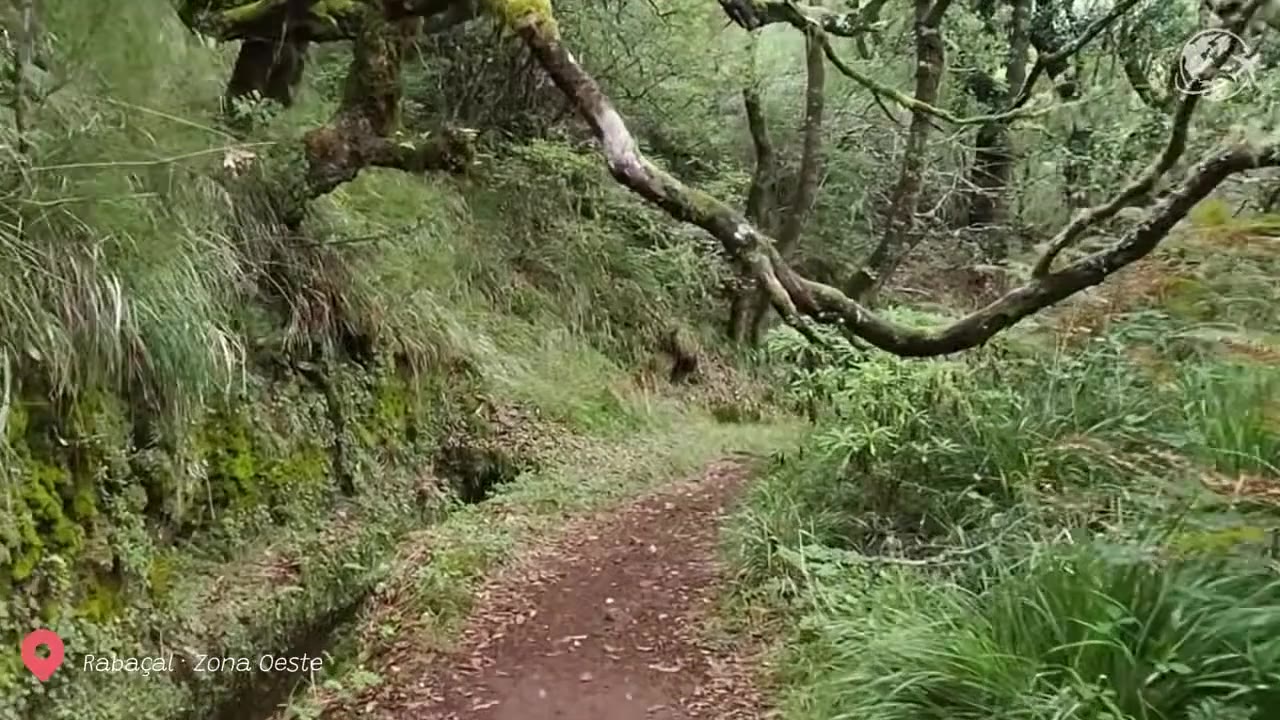
Today, walk PR6.4 from Pico Gordo on ER105 to Casa do Rabaçal. The route follows five kilometres of the old channel and is quieter than the better-known 25 Fontes paths. Do not expect water along every stretch: much of the flow is now diverted into the newer Rabaçal system, but the rock-cut channel, stonework and tunnel setting make this one of the island’s strongest levada-history walks.
| Historic levada | Earliest reliable date | Best visitor access | Walking practicalities |
|---|---|---|---|
| Early Machico/Caniçal channels | Late 15th–early 16th century | Machico and Caniçal | No single official heritage trail; view as a cultural landscape. |
| Levada da Serra do Faial | 16th century origins | Ribeiro Frio | Historic sections overlap the start of PR10. |
| Levada do Rei | 18th–19th centuries | Quebradas, São Jorge | PR18: 5.3 km each way; allow around 3–4 hours return. |
| Levada do Furado | 1822 documented state acquisition | Ribeiro Frio to Portela | PR10: 11 km, generally one-way; allow about 5 hours. |
| Levada Velha do Rabaçal | Work began 1835; completed 1860 | Pico Gordo, ER105 | PR6.4: 5 km to Casa do Rabaçal; allow around 2 hours. |
| Classified trail access fee | 2026 | IFCN-managed routes | Standard individual reservation: €4.50 per applicable trail. |
Planning a historic levada walk
For a straightforward half-day route, choose PR18 Levada do Rei. It is an out-and-back walk, so transport is simple and you finish where you started. PR10 Levada do Furado is better for confident walkers who can arrange a pick-up at Portela or use a taxi after the descent.
PR6.4 Levada Velha do Rabaçal is the best choice for pure engineering history, but the Pico Gordo trailhead is high on Paul da Serra and is much easier with a hire car or organised transport. Weather can change quickly there, even when Funchal is sunny. For wider practical advice on this mountain area, see our guide to Encumeada’s viewpoints, walks and driving conditions.
All three official routes can close temporarily after heavy rain, landslides, forestry work or fire-risk restrictions. Check the IFCN’s official classified-trail page and make the required reservation before travel; never assume an older route is open simply because it appears on a map.
What makes these levadas heritage landmarks
Historic levadas should not be mistaken for decorative water features. They are carefully graded irrigation channels, designed to move water over long distances with a very gentle fall. Their construction supported sugar cultivation first, then vineyards, food crops and later hydroelectric and public-water systems.
Look closely and you will see the practical evolution of the network: hand-cut channels in rock, stone-and-mortar lining, water division houses, tunnels and later concrete repairs. The levada itself is often still in service, which is why walkers must keep clear of gates, valves and maintenance teams.
- Check access on the morning of your walk: official trail conditions can change after rain or rockfall.
- Reserve the correct classified trail: the 2026 individual fee is €4.50 for applicable IFCN routes, excluding the separate PR1 arrangements.
- Carry a torch for older infrastructure: tunnels and shaded cuttings can be dark even during daytime.
- Do not sit on channel edges: levadas are active water infrastructure, not just walking-path scenery.
- Choose PR18 for the simplest logistics: its return route avoids the need to organise an end-point transfer.
- Allow extra time on PR10: the descent towards Portela can feel longer than the level levada section suggests.
Perguntas frequentes
What is the oldest levada in Madeira?
Madeira’s earliest levadas were short private irrigation channels built during the first phase of settlement in the 15th century. Because they were repeatedly rebuilt and are not always identifiable as one named route, there is no single visitor-accessible “oldest levada”.
Can you walk on Madeira’s oldest levadas?
Yes, several historic channels have walkable sections. PR10 Levada do Furado, PR18 Levada do Rei and PR6.4 Levada Velha do Rabaçal are the clearest options for combining a proper walk with levada heritage.
Which historic levada walk is easiest?
PR18 Levada do Rei is usually the easiest to organise because it is an out-and-back route from Quebradas near São Jorge. It is still a forest walk, so wear shoes with grip and take waterproof layers.
Do I need to pay to walk historic levadas in Madeira?
Classified IFCN walking routes have a reservation and access-fee system. In 2026, the standard individual fee for an applicable route is €4.50, but always confirm the current trail status and booking rules before setting off.
Facts and prices verified in October 2026. For more route ideas, explore our guide to the Levada do Norte, prepare for underground sections with Madeira’s longest levada tunnels, and browse more walks in our Categoria «Caminhadas e Levadas».