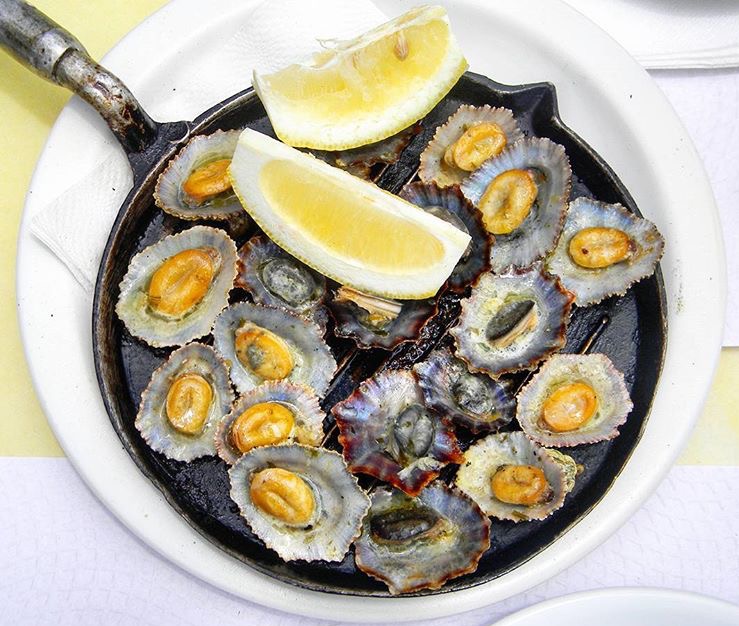
Lapas are Madeira’s classic grilled limpets: small shellfish cooked in their shells with garlic butter, parsley and lemon, usually served sizzling in a hot pan. They are one of the island’s most memorable seafood starters, particularly enjoyable after a swim, a coastal drive or an afternoon by the harbour. In this updated guide, you will learn what lapas Madeira grilled limpets taste like, the Portuguese words to use when ordering, how to eat them politely and where they make an excellent coastal lunch stop.
What are lapas in Madeira?
Lapas are limpets, marine molluscs that live on Madeira’s rocky shoreline. Their low, ridged shells are unmistakable, and the ingredient has long been part of the island’s coastal food culture. The most familiar restaurant preparation is lapas grelhadas, meaning grilled limpets.
Rather than being removed from the shell before cooking, lapas are generally grilled in their shells and brought to the table in the same shallow metal pan. Garlic butter melts into the shells while the heat cooks the limpet meat; parsley and a wedge of lemon complete the dish. Madeira’s official tourism board describes them as a starter, traditionally served in the pan in which they were grilled and commonly paired with bolo do caco.
They are a straightforward dish, but that is the appeal: hot butter, garlic, smoke from the grill and a concentrated taste of the Atlantic. If you like clams, mussels or scallops, lapas are well worth trying. Their texture is firmer and slightly chewier than a clam, with a clean, briny flavour rather than a strong fishy taste.
How to order lapas Madeira grilled limpets
On a Portuguese menu, look for lapas grelhadas. You may also see lapas na frigideira (“limpets in the pan”) or simply lapas under starters, snacks or seafood. A useful order is: “Uma dose de lapas grelhadas, por favor.” This means “One portion of grilled limpets, please.”
A dose is a portion to share or enjoy as a substantial starter. Lapas are not normally a main course on their own, although they can make a satisfying light lunch with bread, a salad and a drink. Ask whether bread is included if you want something to mop up the garlic butter; in many places, it is ordered separately or appears as part of the couvert.
The natural partner is bolo do caco, Madeira’s warm, flat garlic bread. Tear it into small pieces and use it to soak up the buttery juices left in the pan. A cold local beer, dry white wine or a poncha works well nearby, although poncha’s citrus and sugar make it more of an aperitif than a classic seafood pairing.
| Dish name | Lapas grelhadas (grilled limpets) |
| Typical serving | Starter portion, hot in a shallow pan and still in the shells |
| Seasoning | Garlic butter, parsley and lemon |
| What to order with them | Bolo do caco or other bread for the pan juices |
| Price guide | Expect roughly €12–€20 per portion, depending on location and restaurant. Menus recently checked listed €12 in Calheta and Porto Moniz, and €19.50 at a central Funchal hotel restaurant. |
| Dietary note | Shellfish; garlic and dairy are usually part of the standard preparation |
What do grilled limpets taste like?
The limpet itself tastes salty, fresh and lightly mineral, with a firm bite. The garlic butter is not a minor detail: it rounds out the ocean flavour and gives the dish its comforting, savoury character. A squeeze of lemon is usually essential, cutting through the richness and brightening every shell.
First-time visitors sometimes expect lapas to be soft like oysters. They are not. Think of them as closer to a grilled mussel with more chew and a slightly more robust sea flavour. Freshly cooked lapas should be hot, juicy and lightly browned around the edges, never dry or rubbery.
The dish is also an excellent introduction to Madeiran food because it is local without being complicated. It captures the island’s connection to the Atlantic, where lapas have historical, cultural and commercial importance; the regional marine authority notes that limpet gathering in Madeira dates back to the period of early settlement.
How to eat lapas without making a mess
Do not worry if the pan arrives looking unfamiliar: eating lapas is informal. Pick up one shell, use the small fork provided to loosen the meat from the inside, then eat the limpet in one bite. Some diners use their fingers to hold the shell, especially when it is still very hot, but a fork and a napkin are usually all you need.
The shells are not edible, so place them on the side of the pan or on the spare plate if one is provided. Avoid tipping the whole pan towards yourself; the butter can be extremely hot. Instead, spoon a little sauce over the meat or dip bread into the pan once the shells have been cleared.
- Order them as a starter: One portion is usually best shared before fish, espetada or another main dish.
- Add lemon gradually: Taste one first, then decide how much acidity you want.
- Use the bread: The garlicky butter at the bottom of the pan is one of the best parts of the order.
- Ask about allergens: Lapas are shellfish and are normally cooked with butter; tell staff about allergies before ordering.
- Eat them promptly: They are at their best straight from the grill, while the butter is hot and the meat is tender.
- Choose a seafood-focused stop: A busy coastal restaurant with a quick turnover is often a good sign for a simple dish based on freshness.
Best coastal towns for a lapas lunch stop
Câmara de Lobos is an easy choice from Funchal. The fishing village has a working-harbour setting, plenty of casual restaurants and a natural link between seafood lunch and a waterside walk. It is especially convenient if you are exploring the south coast without committing to a full-day drive.
Calheta suits a relaxed beach day. Have lapas as a starter before or after time on the sand, then continue west along the coast. Read our guide to Calheta Beach if you are planning to combine lunch with swimming or water sports.
Porto Moniz is one of Madeira’s most rewarding lunch stops, particularly when visiting the natural volcanic pools. Lapas fit the setting perfectly: a hot pan of seafood after a coastal drive, with the Atlantic close by. Menus and opening days vary with the season, so check directly with your chosen restaurant on the day.
Machico is a practical east-coast option, with a sandy beach, promenade and a traditional town centre. It works particularly well on arrival or departure days, or when touring Ponta de São Lourenço and the east of the island. For more ideas, see our guide to Machico.
If you are travelling independently, a car makes it easier to build lapas stops into a wider coastal route; Madeira’s steep roads and tunnels are manageable with planning. Our practical guide to renting a car in Madeira explains what to expect before setting off.
Frequently asked questions
Are lapas the same as clams?
No. Lapas are limpets, a type of marine mollusc that clings to rocks. They are served in their distinctive cone-shaped shells and have a firmer texture than most clams.
How much do grilled limpets cost in Madeira?
Recent menu checks suggest around €12–€20 for a portion, with prices influenced by the restaurant’s setting and style. Always check the current menu, as portions and prices can change.
Can vegetarians eat lapas?
No. Lapas are shellfish. They are also usually prepared with butter, so they are unsuitable for vegan diners as well.
Are lapas available all over Madeira?
They appear on many traditional and seafood-led menus, especially around Funchal and coastal towns, but availability can depend on supply and the restaurant’s daily menu. If lapas are a priority, call ahead or check the menu before travelling.
Facts and prices verified in August 2026. Continue your Madeiran food exploration with our guides to bolo do caco, Madeira espetada and Madeira food and drink.