


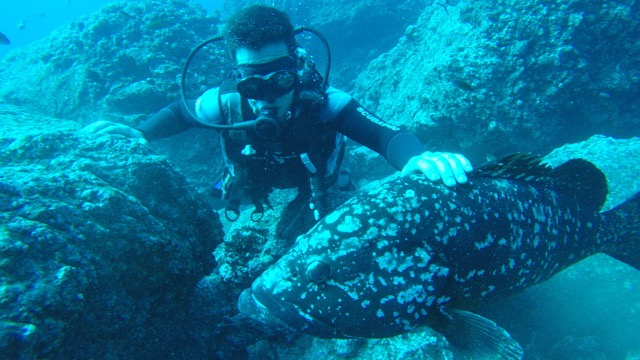
Madeira has two formal marine reserves on the main island—Garajau and Rocha do Navio—but seven named protected areas across the archipelago include an important marine component. That distinction matters: a “marine reserve” is not always a no-entry zone, and the rules for swimming, snorkelling, diving, fishing and boats change considerably from place to place. In this updated guide: where each protected sea area is, which ones are realistic for visitors, and how to enjoy Madeira’s clear Atlantic water without accidentally breaking conservation rules.
The short answer: two marine reserves, seven marine protected destinations
If you are asking how many marine reserves there are in Madeira in the strict official sense, the answer is two: the Partial Nature Reserve of Garajau, on Madeira’s south-east coast, and the Rocha do Navio Nature Reserve, on the north coast near Santana. They are the two areas officially classified as marine reserves by Madeira’s nature-conservation authority.
For visitors, however, it is more useful to think of seven named protected areas with sea territory. Alongside Garajau and Rocha do Navio, these are the Marine Protected Areas Network of Porto Santo, the Marine Park of Cabo Girão, the Marine Natural Park of Ponta do Pargo, the Desertas Islands Nature Reserve and the Selvagens Islands Nature Reserve. Their protection levels range from managed coastal recreation to highly restricted offshore wilderness.
The main lesson is simple: protected does not automatically mean closed. Garajau is one of Madeira’s best-known places for recreational diving and snorkelling, while the remote Selvagens are an integral reserve where visiting, diving and overnight stays need prior authorisation.
| Protected area | Where it is | Best visitor use | What to know before you go |
|---|---|---|---|
| Garajau Partial Nature Reserve | South-east Madeira, between Lazareto and Ponta da Oliveira | Swimming, snorkelling and diving | Fishing, spearfishing, nets and motorised navigation are prohibited within the reserve. |
| Rocha do Navio Nature Reserve | North coast, below Santana | Scenery, diving and limited shore-based sea activities | Reached by cable car or a steep path; north-coast sea conditions can be rough. |
| Cabo Girão Marine Park | South coast below Cabo Girão and Fajã dos Padres | Boat diving and artificial-reef dives | Recreational diving is subject to registration/request procedures; fishing remains regulated rather than universally banned. |
| Ponta do Pargo Marine Natural Park | Far west of Madeira | Boat-based wildlife and coastal scenery | There is no conventional swimming beach; fishing is allowed under the applicable regional rules. |
| Porto Santo Marine Protected Areas Network | Porto Santo islets and surrounding sea | Diving, boat trips and islet views | Rules differ by zone; landing on protected islets requires authorisation. |
| Desertas Islands Nature Reserve | South-east of Madeira | Licensed boat excursions and wildlife watching | Visits and landings are managed by the IFCN; do not assume a boat trip permits independent exploration. |
| Selvagens Islands Nature Reserve | Far south of Madeira, near the Canary Islands | Specialist authorised expeditions | Prior authorisation is required, and fishing is prohibited throughout the reserve. |
Garajau: the reserve most beachgoers and snorkellers can actually use
Garajau is the protected area most relevant to a typical Madeira holiday. It covers the sea between Ponta do Lazareto and Ponta da Oliveira, extending offshore to the 50-metre depth contour and generally no less than 600 metres from the coast. Access is commonly made from Praia do Garajau or Cais do Lazareto.
For visitors, the key point is that swimming, amateur diving and non-motorised water sports are allowed. This is why Garajau features so often in guides to diving and snorkelling: fish are less wary than in heavily fished coastal water, and the steep volcanic seabed gives divers depth close to shore.
The rules are strict on extraction. Do not fish, spear fish, collect marine animals, use nets or take shells and limpets from the water. Motorised navigation is also prohibited inside the reserve, so join a properly organised dive or snorkelling trip rather than assuming a private boat can stop anywhere. Recreational divers should use an authorised local centre, which can make the required booking through the regional system.
For a detailed practical plan, see our guide to snorkelling in Madeira, including what to bring and when the sea is usually calmest.
Rocha do Navio: a reserve for scenery first, swimming second
Rocha do Navio lies beneath Santana on Madeira’s dramatic north coast. Its protected sea runs from Ponta do Clérigo to Ponta de São Jorge and reaches the 100-metre depth contour, including the islets offshore. The area can be accessed by the Rocha do Navio cable car or a demanding steep footpath, but sea state is a serious practical limitation here.
This is not the place to plan an easy all-day swim. On a calm day, the fajã and its pebble shore are beautiful and unusually peaceful; on many days, Atlantic swell makes entering the water unwise. Check conditions locally, never rely on a sunny forecast alone, and do not swim beyond your ability.
Unlike Garajau, some fishing is permitted here, including commercial fishing and recreational line fishing. Gill nets and other nets are prohibited, as are spearfishing and the underwater collection of limpets and topshells. Diving and non-motorised nautical activities are allowed, but this is a location where local knowledge and proper equipment matter greatly.
Cabo Girão and Ponta do Pargo: protected sea does not mean a beach reserve
The Marine Park of Cabo Girão protects the water below Europe’s famous sea cliff and around Fajã dos Padres. It is principally a boat- and dive-oriented area, rather than somewhere to spread a towel on a sandy beach. The wreck of the corvette Afonso Cerqueira, sunk in 2018 as an artificial reef, is a focal point for qualified divers. Fishing is permitted under the relevant rules, but the reef’s protected buffer is reserved for recreational diving rather than general leisure boating or fishing.
At the far western end of Madeira, the Ponta do Pargo Marine Natural Park protects a much wilder stretch of coast. Think cliff-top views, seabirds and open ocean rather than easy access to the sea. Professional and recreational fishing are allowed within the applicable legal framework, so visitors should not mistake the designation for a total fishing ban.
Porto Santo, Desertas and Selvagens: offshore rules need more planning
Porto Santo’s protected marine network includes all of the island’s surrounding islets and marine areas around Ilhéu da Cal (Ilhéu de Baixo) and Ilhéu de Cima. It has total-protection and partial-protection zones, so there is no single rule for the entire network. Scuba diving is possible, including around two artificial reefs, but visits to the islets require prior authorisation from the IFCN.
The Desertas Islands are visited on organised sea trips from Madeira, usually for wildlife viewing and a managed landing or guided walk. Private boats and tourist vessels need authorisation to visit, so book with an operator that handles the formalities rather than treating the islands as an open-access beach stop.
The Selvagens are even more protected and far more remote. Their marine reserve extends to 12 nautical miles around the islands; access, diving, guided visits and overnight stays require IFCN authorisation, and fishing is prohibited throughout the area. They are an expedition destination, not a spontaneous day trip.
- Choose Garajau for an easy protected-water experience: it is the most practical reserve for holiday snorkelling or a first dive.
- Read signs and respect buoyed areas: boundaries are legal conservation zones, not suggestions for boats or fishers.
- Do not collect “souvenirs” from the sea: shells, limpets, marine animals and plants belong where you find them.
- Treat north-coast water cautiously: Rocha do Navio may look inviting but can become unsafe quickly in swell.
- Book regulated activities through established operators: this is especially important for diving, protected-island landings and offshore trips.
- Keep wildlife encounters passive: never chase turtles, fish, monk seals or cetaceans, and avoid touching anything underwater.
Frequently asked questions
Can you swim in Madeira’s marine reserves?
Yes, particularly in Garajau, where swimming and recreational diving are allowed. Elsewhere, access and sea conditions may be the limiting factor, especially on the north coast and around offshore islands.
Is fishing banned in all protected sea areas in Madeira?
No. Fishing is prohibited in Garajau and throughout the Selvagens reserve, but regulated fishing is permitted in areas such as Rocha do Navio, Cabo Girão and Ponta do Pargo. Always check the rules for the exact area and activity.
Do I need permission to dive in a marine reserve?
For Garajau, Cabo Girão, Porto Santo and the Selvagens, recreational diving is subject to the IFCN’s reservation or authorisation procedures. In practice, a licensed local dive centre normally manages this for visitors.
Which marine reserve is best for snorkelling in Madeira?
Garajau is usually the strongest choice because it is accessible from the south coast, allows swimming and has long-established recreational diving infrastructure. Conditions still depend on wind, swell and visibility on the day.
Facts and prices verified in October 2026. For more sea-planning advice, read our guides to snorkelling in Madeira, scuba diving in Madeira and whale and dolphin species in Madeira. Before any sea activity, check local conditions and follow instructions from lifeguards, skippers and authorised operators.
