Madeira is an outstanding trail-running destination, but its steep climbs, slippery stone paths and rapidly changing mountain weather demand more preparation than the island’s compact size suggests. In this updated guide: the best trail running routes Madeira has for coastal, levada and mountain training; how to handle access reservations and fees; what to carry; and when race weekends can make transport and accommodation harder to arrange.
Why Madeira suits trail runners
Madeira packs exceptional variety into a small island. In one week, you can run exposed volcanic coastline, eucalyptus and laurel forest, old cobbled paths between villages, and high mountain ridges above the cloud layer. The catch is vertical gain: a modest-looking route can include long, relentless climbs or technical descents over wet stone steps.
Levada paths are usually the most runnable option for steady aerobic outings. They follow historic irrigation channels at gentler gradients, although they can be narrow, uneven and busy. Coastal routes are windier and more open, while the central mountains are for experienced runners who are comfortable with drops, stairs, tunnels, cold wind and reduced visibility.
Do not treat a mapped hiking time as a running promise. On Madeira, route conditions, crowds, photo stops, rain and steep terrain can change your pace dramatically. Choose a route according to its surface and ascent, not distance alone.
Four trail running routes Madeira runners should consider
Ponta de São Lourenço (PR8): This eastern peninsula is the best introduction to Madeira’s dry, open terrain. Expect a rolling, exposed path through rust-coloured volcanic scenery, constant ocean views and little shade. It is excellent for a shorter morning run when the wind is manageable, but it is not a place to underestimate sun, gusts or loose ground. Start early and keep enough energy for the return climb.
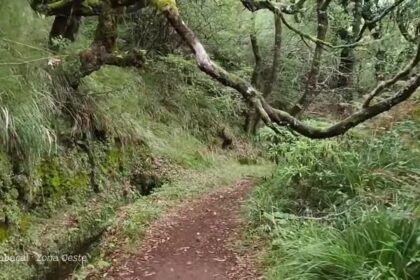
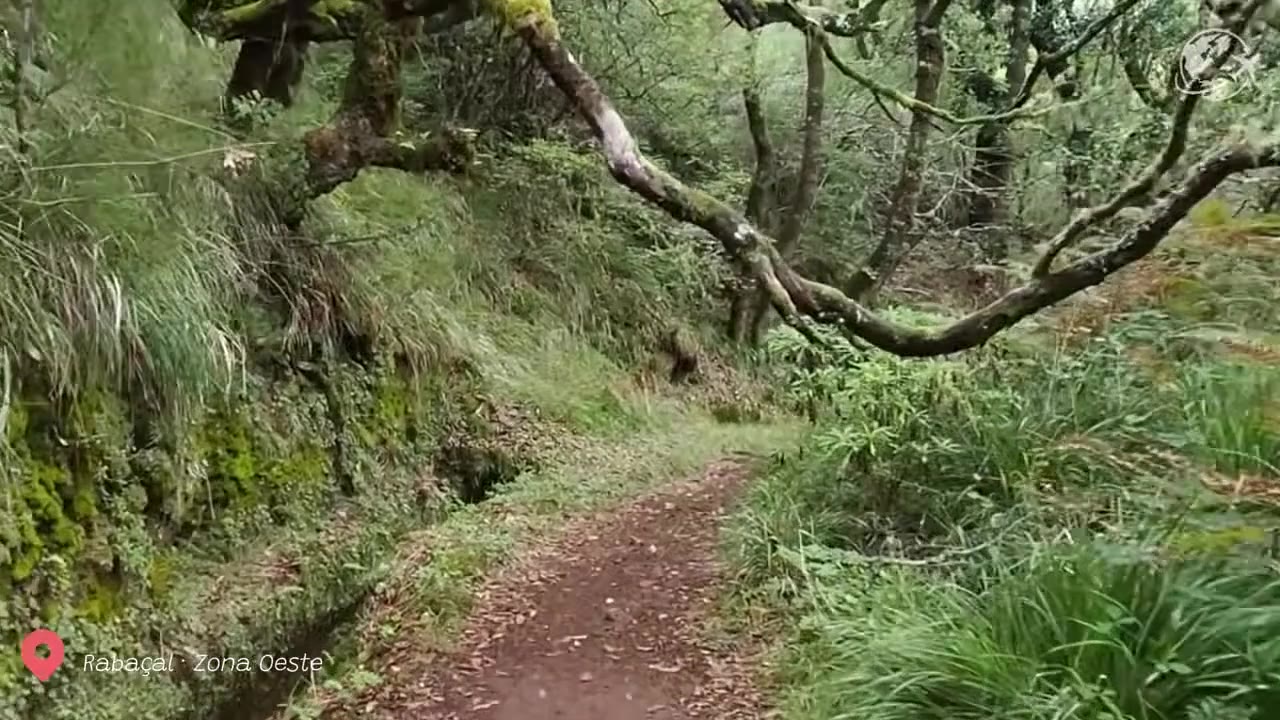
Levada do Alecrim (PR6.2), Rabaçal: With 3.5 km each way from Rabaçal to the levada source, this is a practical choice for a controlled out-and-back run in the Paul da Serra area. The route is more sheltered than the coast and generally suits runners looking for flowing forest terrain rather than major elevation. Combine it with a short visit to Risco waterfall only if you are happy sharing the path with walkers.
Levada do Rei (PR18): This 5.3 km out-and-back levada route near São Jorge runs into the lush Ribeiro Bonito valley. It makes a rewarding easy-to-moderate forest run, particularly for runners who enjoy humidity, vegetation and a less exposed environment. The surface can be wet and slippery after rain, so trail shoes with secure grip are far more useful than road-running shoes.
Pico Ruivo and the Areeiro ridge (PR1/PR1.2): For mountain runners, this is Madeira’s dramatic high-altitude terrain: steep stone stairways, ridges and big views when the cloud clears. As of 25 November 2026, the full PR1 between Pico do Areeiro and Pico Ruivo has reopened in a one-way direction from Pico do Areeiro towards Pico Ruivo. The route needs advance planning because it is not an out-and-back run, while the separate PR1.2 from Achada do Teixeira to Pico Ruivo is 2.8 km each way. Check the official trail-status page on the morning of your run; closures can change after bad weather or safety inspections.
| Practical fact | What runners need to know |
|---|---|
| Best bases | Funchal for services and transfers; Machico for the east coast; Calheta or Ponta do Sol for south-west routes; Santana or São Vicente for greener northern terrain. |
| Classified-trail access | Advance registration is compulsory for IFCN-managed classified trails, using timed entry slots. |
| 2026 visitor fee | €4.50 for one individual classified trail, except the full PR1; a full PR1 access costs €10.50. A one-day combined-trails fee is €9, excluding PR1. |
| PR1 direction | From 25 November 2026, the Pico do Areeiro–Pico Ruivo section is open one-way, heading from Areeiro towards Pico Ruivo. |
| Water | Carry your own supply. Do not rely on levada water, springs or cafés being available along a route. |
| Best running window | Early morning is usually quieter and cooler, especially on exposed south-coast and eastern routes. |
The current 2026 reservation model applies to classified routes managed by IFCN, rather than every path on the island. Residents, children aged 12 and under, and some visitors with qualifying disability documentation are exempt from payment, but registration and capacity controls may still apply.
Weather, terrain and mandatory kit mindset
Madeira’s weather is local rather than island-wide. Funchal can be warm and dry while Pico do Areeiro is cold, wet and inside cloud. A clear sea-level forecast is therefore not enough for a mountain run. Check the forecast for your altitude and the official trail status before leaving, then turn back if visibility, wind or rain makes the terrain feel unsafe.
For any route beyond a short coastal outing, carry a charged phone, offline mapping, a light waterproof layer, food, water, a small first-aid kit and an emergency foil blanket. A head torch is essential if there is any chance of finishing near dusk or entering tunnels. On mountain or remote routes, a whistle and a power bank are sensible additions.
Trail poles are optional but valuable for runners with less confidence on sustained descents. More importantly, wear shoes that can grip wet rock. Smooth road soles are a poor match for mossy levada edges, slick cobbles and damp stone steps.
Race season: when to book accommodation early
Madeira hosts trail events across much of the year, from local short races to international ultras. The headline event is MIUT, the Madeira Island Ultra-Trail. Its 2027 edition is scheduled for 24 and 25 April, and registration opened in October 2026. MIUT includes distances from a 17 km starter race to the 110 km Legend, drawing runners, crews and spectators to several parts of the island.
For a race trip, book accommodation as soon as your entry is confirmed, particularly in Funchal, Machico, Porto da Cruz and areas close to transport links. Even if you are not racing, avoid assuming that a normal spring weekend will be quiet: event routes can affect road access, taxi availability and hotel choice. Madeira’s regional trail calendar also includes races in Porto Moniz, Calheta, Porto da Cruz, Câmara de Lobos and Funchal across the season.
If you simply want a training holiday, late autumn and winter can bring greener trails and fewer visitors, but also a higher chance of rain and route closures. Spring offers long daylight and race atmosphere; summer is best for early starts, especially on exposed routes.
Running etiquette and smart logistics
Madeira’s trails are shared spaces, not race courses. Slow down before passing walkers, greet people clearly, and give priority on narrow sections to uphill users and anyone negotiating a difficult step or drop. Never push past a queue on a levada edge, and do not run through closed gates, barriers or warning signs.
A rental car gives the most flexibility for point-to-point outings, but only if you are comfortable with steep roads and limited parking at popular trailheads. Taxis and pre-booked transfers are often easier for one-way mountain runs. For the Areeiro area, read our practical guide to getting from Funchal to Pico do Areeiro before relying on public transport.
- Reserve before travelling: Popular classified trails can have limited timed-entry capacity, so do not wait until you arrive to check availability.
- Start with a levada: Give your legs one easier run before attempting mountain ridges or long stair descents.
- Carry more water than feels necessary: Humidity and vertical climbing increase effort quickly, even on cool days.
- Download maps in advance: Mobile signal is not reliable in deep valleys, forest and high mountains.
- Plan the finish, not only the start: Confirm where you will collect a car or meet a taxi after any one-way route.
- Respect closures without exceptions: A closed trail may involve landslide risk, damaged handrails or unsafe weather conditions.
Preguntas frecuentes
Is Madeira good for beginner trail runners?
Yes, if you choose carefully. Start with shorter levada routes or the eastern coast rather than high mountain traverses. Madeira’s elevation and uneven surfaces make even easy routes more demanding than their distance suggests.
Can I run the Pico do Areeiro to Pico Ruivo trail?
Yes, but only after checking the official status, booking requirements and current direction rules. From 25 November 2026, PR1 reopened one-way from Pico do Areeiro towards Pico Ruivo, so arrange transport from the far end before starting.
Do I need to pay to run Madeira’s trails?
Many IFCN-managed classified trails require pre-registration and a fee for non-resident visitors. In 2026, the standard individual-route fee is €4.50, while the full PR1 access costs €10.50.
What is the best month for trail running in Madeira?
There is no single best month. Spring is excellent for daylight and race energy, while autumn often brings greener landscapes and milder temperatures. In every season, mountain conditions can be colder, wetter and windier than the coast.
Facts and prices verified in November 2026. Before any run, check the official IFCN trail-status and booking information, especially for mountain routes. For more planning help, see our guide to the Pico do Areeiro to Pico Ruivo (PR1), our overview of Madeira’s highest mountain roads and tunnels, and the wider Categoría «Senderismo y levadas».