


Madeira has eight named protected areas that include a marine zone, although only some are straightforward places for visitors to swim, snorkel, dive or join a boat trip. In this updated guide: understand why the total can be confusing, find Madeira’s best-known marine reserves, learn where water activities are allowed, and see which remote island reserves can be visited by authorised boat trips.
Why the number of marine protected areas in Madeira can vary
For visitors, the clearest answer is eight marine protected areas in Madeira: Garajau, Rocha do Navio, Ponta de São Lourenço, Cabo Girão, Ponta do Pargo, the Porto Santo Marine Protected Areas Network, the Desertas Islands and the Selvagens Islands.
The apparent difference in totals comes from Madeira’s layered conservation system. Some places are formally called Reserva Natural (Natural Reserve), while others are marine parks, protected areas, Natura 2000 sites or mixed land-and-sea protected landscapes. Several also overlap. In practical terms, all eight have protected sea territory and rules intended to safeguard habitats, seabirds, fish populations, coastal geology and, in the offshore islands, exceptionally important wildlife.
Do not assume that “protected” means inaccessible. Madeira’s marine conservation areas range from easily reached swimming and diving sites near Funchal to remote reserves where landing, diving and even anchoring require prior authorisation.
The easiest marine reserves to experience from Madeira Island
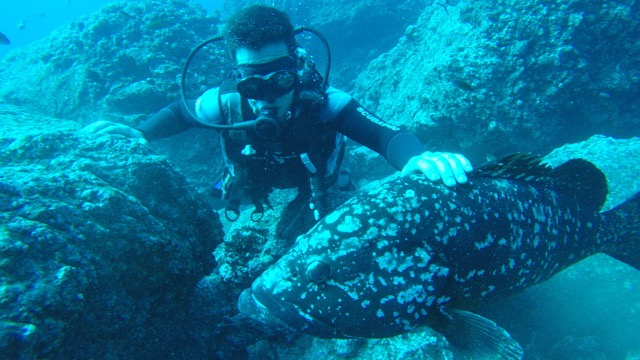
Garajau Partial Natural Reserve, on the south coast east of Funchal, is Madeira’s best-known visitor-friendly marine reserve. It runs along approximately six miles of coast between Ponta do Lazareto and Ponta da Oliveira. The sheltered water around Praia do Garajau is popular for swimming, snorkelling and recreational diving, with clear conditions often revealing large fish close to the rocky shore. Fishing and collecting marine life are prohibited, helping the underwater environment remain notably lively.
Rocha do Navio Natural Reserve lies beneath Santana on Madeira’s dramatic north coast. It is a much wilder proposition: access is via the Rocha do Navio cable car or a demanding steep path, and the sea can be rough. The reserve includes the waters around Rocha das Vinhas and Viúva islets. Recreational diving and non-motorised water sports are allowed, but this is not a casual beach-swimming destination; assess sea conditions carefully before going.
Ponta de São Lourenço, at Madeira’s eastern tip, protects a dry volcanic peninsula, offshore islets and adjoining waters. Most people visit on foot for the PR8 trail rather than for swimming, but boat trips regularly pass the headland and its sculpted cliffs. The Desembarcadouro and Farol islets have total-protection status, so visitors should keep to authorised routes and respect marked restrictions. The area is especially valuable for nesting seabirds and endemic coastal plants.
Cabo Girão and Ponta do Pargo are also protected coastal-and-marine areas. Cabo Girão’s marine park sits below the famous cliff and helps protect deep coastal habitats, while Ponta do Pargo safeguards an exposed far-western coastline. These are better understood as conservation landscapes seen from the sea or viewpoints than as independent beach attractions. Recreational diving at Cabo Girão is regulated, and local sea conditions should always guide plans.
| Protected area | Where it is | Best visitor experience | Swimming, diving and access |
|---|---|---|---|
| Garajau Partial Natural Reserve | South coast, east of Funchal | Snorkelling and recreational diving | Swimming and recreational diving are permitted; do not fish or collect marine life. |
| Rocha do Navio Natural Reserve | North coast, below Santana | Wild scenery and advanced diving | Marine access is free, but the coast is exposed and conditions can be difficult. |
| Ponta de São Lourenço Protected Area | Eastern tip of Madeira | PR8 coastal walk and boat views | Keep to permitted visitor areas; offshore islets include strict-protection zones. |
| Cabo Girão Protected Area | South coast, west of Funchal | Cliff views and regulated diving | Marine activities are subject to local conservation rules and sea conditions. |
| Ponta do Pargo Protected Area | Far west of Madeira | Remote coastal scenery | Best appreciated from land or by sea on suitable days; not a standard swimming stop. |
| Porto Santo Marine Protected Areas Network | Porto Santo and surrounding islets | Boat trips, diving and islet wildlife | Visits to islets require prior authorisation; marine areas include wreck sites. |
| Desertas Islands Natural Reserve | Southeast of Madeira | Authorised boat excursion and wildlife viewing | Landing and activities are controlled; diving is allowed only in designated partial-protection waters. |
| Selvagens Islands Natural Reserve | Far southeast of Madeira | Expedition-style wildlife visit | Prior authorisation is essential; fishing is prohibited throughout the reserve. |
The offshore reserves: Desertas, Porto Santo and Selvagens
The Desertas Islands Natural Reserve is the most realistic offshore reserve for a day at sea from Madeira. The three rugged islands — Ilhéu Chão, Deserta Grande and Bugio — lie southeast of the main island. They are famous for the critically protected Mediterranean monk seal, known locally as lobo-marinho, as well as seabirds and sharply arid landscapes. Commercial maritime-tourism boats can visit, but access is managed by the regional conservation authority. Landing is normally associated with the authorised area at Doca Bay on Deserta Grande; do not treat the islands as a free-roaming hiking destination.
The Porto Santo Marine Protected Areas Network combines Porto Santo’s surrounding islets with protected waters around Ilhéu da Cal and Ilhéu de Cima. It also includes the areas around the deliberately sunk vessels O Madeirense and the corvette Pereira D’Eça, both of interest to divers. The six islets are ecologically sensitive, and visits or landings require prior authorisation. For most holidaymakers, Porto Santo’s long sandy beach remains the easy choice; see our Porto Santo Beach guide for practical planning.
The Selvagens Islands Natural Reserve is a true expedition destination rather than a normal day trip. Located far to the southeast, it protects Selvagem Grande, Selvagem Pequena, Ilhéu de Fora and the surrounding sea out to 12 nautical miles. Visitor access, diving, interpretive walks and overnight stays require authorisation from the IFCN, Madeira’s nature-conservation authority. If you see a trip advertised, confirm exactly what authorisations, landing arrangements and weather contingencies are included before booking.
Where can you swim, snorkel and dive?
For an uncomplicated sea day, choose Garajau. It is the reserve most visitors can enjoy independently, provided conditions are calm and you stay clear of prohibited activities. Rocha do Navio is rewarding but more weather-dependent, while Ponta de São Lourenço is primarily a hiking and sightseeing area rather than a reliable swim stop.
Diving is actively supported in several protected areas, but the rules differ by location. Garajau, Rocha do Navio and the partial-protection waters of the Desertas allow recreational diving; the Selvagens also allow it with authorisation. Use a properly licensed local dive operator, ask where the planned site sits within the protected-area zoning, and never touch wildlife, move rocks or remove shells.
For shore-based snorkelling, protected status does not automatically mean easy entry or safe conditions. Madeira has steep coasts, surge and occasional strong currents. If your priority is an accessible swim with facilities, our guide to Madeira’s lidos and seawater pools is a more suitable starting point.
How to visit responsibly
- Check the sea state first. Clear sunshine does not guarantee calm water, particularly on Madeira’s north and west coasts.
- Choose Garajau for an independent first experience. It is the most accessible reserve for swimming, snorkelling and introductory diving.
- Book offshore trips through established maritime-tourism operators. They should arrange or hold the necessary access permissions for the Desertas and other controlled sites.
- Keep your distance from seals, nesting birds and dolphins. Observation is the goal; approaching, feeding or attempting to swim with wildlife is not responsible tourism.
- Do not take natural souvenirs. Shells, stones, plants and marine organisms all play a role in sensitive coastal ecosystems.
- Plan wildlife trips with realistic expectations. Sightings are never guaranteed, but Madeira’s waters are exceptionally rich; read our whale and dolphin species guide before choosing an excursion.
Frequently asked questions
How many marine protected areas are there in Madeira?
For visitor planning, there are eight named protected areas in the Madeira archipelago that include marine territory: Garajau, Rocha do Navio, Ponta de São Lourenço, Cabo Girão, Ponta do Pargo, Porto Santo, the Desertas and the Selvagens.
Can you swim in Madeira’s marine reserves?
Yes, most easily at Garajau, where swimming and recreational diving are permitted. Elsewhere, protection rules, access, currents and swell can make swimming unsuitable or restricted, so check local conditions on the day.
Can visitors go to the Desertas Islands?
Yes, by authorised private or maritime-tourism boat. Access is controlled, and landing is limited to permitted areas. The islands should be visited as a guided conservation destination, not as an unrestricted beach or hiking trip.
Can you visit the Selvagens Islands from Madeira?
It is possible, but it requires prior authorisation and is generally suited to organised expeditions rather than ordinary holiday boat trips. Travel time, weather and landing conditions make it a specialist experience.
Facts and prices verified in November 2026. For more sea-day planning, see our guides to snorkelling in Madeira, whale and dolphin watching and Madeira’s beaches and sea.
